Ditapis dengan

MAHATIR : The secret of the Malaysian success
Contents: 1. 2002 - A world of uncertainty - The Malaise of the Malays 2. 1960s - The family : An anchor - The progresive doctor 3. 1970s - What did independence bring? - Ruling your own country 4. 1980s - Look east - The feudal culture, etc.
- Edisi
- -
- ISBN/ISSN
- 9958-717-06-9
- Deskripsi Fisik
- xvii, 275 pages ; 22 cm
- Judul Seri
- -
- No. Panggil
- 959.5 Som m

Putin's Russia
Internationally admired for her fearless reporting, especially on the Chechen wars, award-winning journalist Anna Politkovskaya has turned her steely gaze on the man who, until very recently, was a darling of the Western media. A former KGB spy, Vladimir Putin was named President of Russia in 2000. From the moment he entered the public arena, he marketed himself as an open, enlightened leader e…
- Edisi
- Cet. 1
- ISBN/ISSN
- -
- Deskripsi Fisik
- 302 pages ; 20 cm
- Judul Seri
- -
- No. Panggil
- 923.1 Pol p

Kamoro Suku Mimika
Buku ini berisi: 1. Latar belakang 2. Kontak awal Suku Kamoro dengan dunia luar 3. Suku Kamoro 100 tahun lalu: Ekspedisi British ornithological 4. Pemerintah Belanda, Perutusan Gereja Katolik roma, dan perang dunia II: Berbagi perubahan drastis 5. Periode sesudah Perang Dunia II 6. Struktur sosial 7. Berbagai ritual Kamoro 8. Karapao pada masa sekarang 9. Kesenian Kamoro 10. Festival …
- Edisi
- -
- ISBN/ISSN
- 978-602-74035-1-2
- Deskripsi Fisik
- 192 pages ; 21 cm
- Judul Seri
- -
- No. Panggil
- 995.1 Mul k

Tumbal vaksin maut Jepang : Biografi Prof. Dr. Achmad Mochtar : Pelopor keban…
PROF. DR. ACHMAD MOCHTAR (1891-1945) adalah ilmuwan kedokteran Indonesia paling terkemuka pada masanya, menulis 54 karya ilmiah yang sebagian besar diterbitkan dalam jurnal kedokteran paling bereputasi di Hindia Belanda. Dalam hal ini ia hanya bisa dibandingkan dengan sejawat segenerasinya, Prof. Dr. R. Sardjito, Rektor Universitas Gadjah Mada yang pertama yang telah ditetapkan sebagai Pahlawan…
- Edisi
- Ed.2 ; cet.2
- ISBN/ISSN
- 978-623-96629-8-1
- Deskripsi Fisik
- xxiv, 299 halaman : ilustrasi ; 21 cm
- Judul Seri
- -
- No. Panggil
- 926.1 Cha t

Pakistan's drift into extremism: Allah, the army, and America's war on terror
This book examines the rise of religious extremism in Pakistan, particularly since 1947, and analyzes its connections to the Pakistani army's corporate interests and U.S.-Pakistan relations. It includes profiles of leading Pakistani militant groups with details of their origins, development, and capabilities. The author begins with an historical overview of the introduction of Islam to the Indi…
- Edisi
- Cet. 1
- ISBN/ISSN
- 81-8274-159-9
- Deskripsi Fisik
- xvii, 275 pages : illustrations (black and white) ; 22 cm
- Judul Seri
- -
- No. Panggil
- 954.91 Abb p
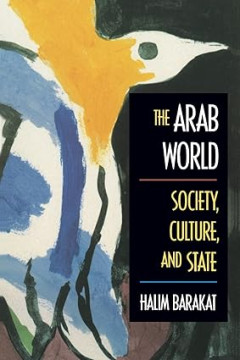
The Arab world : society, culture, and state
The Arab world is not one shaped by Islam, nor one simply explained by reference to the sectarian conflicts of a "mosaic" society. Instead, Barakat reveals a society that is highly complex, with many and various contending polarities. It is a society in a state of becoming and change, one whose social contradictions are at the root of the struggle to transcend dehumanizing conditions. Arguing f…
- Edisi
- -
- ISBN/ISSN
- 0-520-08427-6
- Deskripsi Fisik
- xiii, 348 pages ; 23 cm
- Judul Seri
- -
- No. Panggil
- 939.4 Bar a

Brutal truths, fragile myths: Power politics and western adventurism In The A…
Why has the Arab world failed to achieve the political freedom, social stability, and economic improvement experienced in much of the rest of the world since the end of the Cold War? In Brutal Truths, Fragile Myths, veteran journalist Mark Huband argues that few of the region's leaders are capable of initiating the deep political changes necessary to address the challenges confronting them, and…
- Edisi
- -
- ISBN/ISSN
- 0-8133-3753-4
- Deskripsi Fisik
- xvii, 331 pages : illustrasi (black and white) ; 23 cm
- Judul Seri
- -
- No. Panggil
- 909.097 Hub b
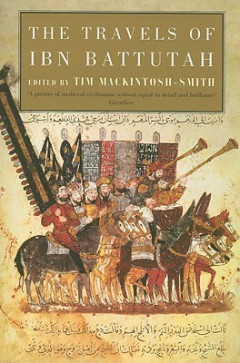
The travels of Ibn Battutah
Ibn Battutah was just 21 when he set out in 1325 from his native Tangier on a pilgrimage to Mecca. He did not return to Morocco for another 29 years, traveling instead through more than 40 countries on the modern map, covering 75,000 miles and getting as far north as the Volga, as far east as China, and as far south as Tanzania. He wrote of his travels, and comes across as a superb ethnographer…
- Edisi
- -
- ISBN/ISSN
- 978-0-330-41879-9
- Deskripsi Fisik
- xviii, 325 pages : illustrations (black and white) ; 20 cm
- Judul Seri
- -
- No. Panggil
- 923.9 Smi t

Brazil: Five centuries of change
With a land mass larger than the continental United States, a unique culture that is part European, African, and indigenous, and the largest economy in Latin America, Brazil is one of the most important--yet one of the least understood--nations in the world. Thomas Skidmore, a preeminent authority on Brazil, vividly traces the 500 years of Brazil's development. Its epic story begins in the wak…
- Edisi
- -
- ISBN/ISSN
- 0-19-505810-0
- Deskripsi Fisik
- xiv, 254 pages : illustrations (black and white) ; 23 cm
- Judul Seri
- -
- No. Panggil
- 981 Ski b

African in history: Themes and outlines, revised and expanded edition
Prior to the original publication of Africa in History, the history and development of Africa had been measured by the European concept of "civilization," applying a Eurocentric approach to African art and literature. Basil Davidson's landmark work presents the inner growth of Africa and its worldwide significance, the internal dynamic of its old civilizations and their links with Asia, Europe …
- Edisi
- -
- ISBN/ISSN
- 0-684-82667-4
- Deskripsi Fisik
- xxv, 425 pages : illustrations (black and white) ; 21 cm
- Judul Seri
- -
- No. Panggil
- 960 Dav a
 Karya Umum
  Filsafat
  Agama
Agama  Ilmu-ilmu Sosial
  Bahasa
  Ilmu-ilmu Murni
  Ilmu-ilmu Terapan
  Kesenian, Hiburan, dan Olahraga
  Kesusastraan
  Geografi dan Sejarah