Ditapis dengan

Facts for the people terror in Yemen: Where to?
The terrorism phenomenon, which occurred since mankind was created, has been always denounced and rejected throughout history. So it is as old as mankind. But it is in human nature to love goodness, peace, security and stability while evil and violence have remained strange and anomalous manifestations and contrary to God's creation of man. Thus, human history has bad memories of these manifest…
- Edisi
- -
- ISBN/ISSN
- -
- Deskripsi Fisik
- 96 pages : illustrations ; 18 cm
- Judul Seri
- -
- No. Panggil
- 953.3 Dep f
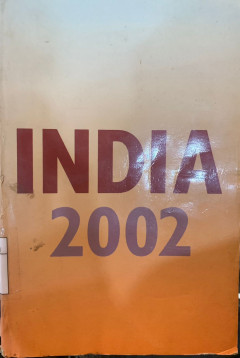
India 2002: A reference annual
The reference annual, India-2002, contains information on diverse aspects of the country-its geography and demographic features, polity, economy, society and culture. The information is gathered from Central Government Ministries/ states/ union territories and other organizations. As a work of reference, the annual is particularly useful to scholars, authors, students, officials, journalists, a…
- Edisi
- -
- ISBN/ISSN
- 81-230-1005-2
- Deskripsi Fisik
- 868 pages ; 24 cm
- Judul Seri
- -
- No. Panggil
- 954 Ind i

Korea: The divided nation
Following its liberation from Japanese colonialism, at the end of WWII, Korea was divided into two separate nations. Because the Korean nation enjoyed a long dynastic history, its postwar partition was particularly traumatic. The ensuing Cold War years spawned the Korean War and subsequent decades of strained inter-Korean relations and tensions in the region surrounding the peninsula. This volu…
- Edisi
- Cet. 1
- ISBN/ISSN
- 0-275-98307-2
- Deskripsi Fisik
- 191 pages ; 24 cm
- Judul Seri
- -
- No. Panggil
- 951.9 Ols k

Hong Kong 1996: A review of 1995 and a pictorial review of the past fifty years
Contents: 1. The way we are 2. Constitution and administration 3. The legal system 4. Implementation of the Sino-British Joint declaration 5. The economy 6. Financial and monetary affairs etc.
- Edisi
- -
- ISBN/ISSN
- 962-02-0220-1
- Deskripsi Fisik
- 494 pages : illustrations ; 24 cm
- Judul Seri
- -
- No. Panggil
- 951.25 How h
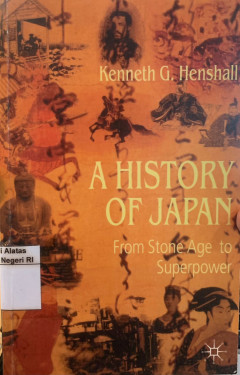
A history of Japan: From stone age to superpower
In a rare combination of comprehensive coverage and sustained critical focus, this book examines Japanese history in its entirety to identify the factors underlying the nation's progression to superpower status. Japan's achievement is explained not merely in economic terms, but at a more fundamental level, as a product of historical patterns of response to circumstance. Japan is shown to be a n…
- Edisi
- Ed. 1
- ISBN/ISSN
- 0-312-21986-5
- Deskripsi Fisik
- xvi, 242 pages ; 22 cm
- Judul Seri
- -
- No. Panggil
- 952 Hen h
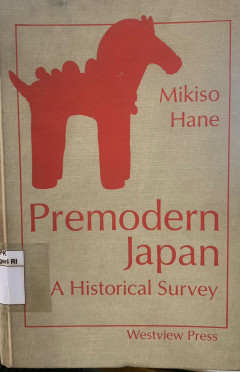
Premodern Japan: A historical survey
This newly revised volume drawn from Professor Hane’s classic text, Japan: A Historical Survey, presents a rich account of early Japanese history for students. Important elements of early Japanese history persist in present-day Japan more tenaciously than is sometimes realized. Hane traces the key developments of Japanese history in the premodern period, including the establishment of the imp…
- Edisi
- -
- ISBN/ISSN
- 0-8133-8066-9
- Deskripsi Fisik
- xii, 258 pages ; 24 cm
- Judul Seri
- -
- No. Panggil
- 952 Han p
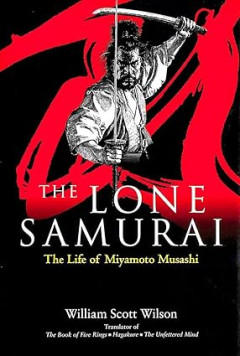
The lone samurai: The life of Miyamoto Musashi
The Lone Samurai is a landmark biography of Miyamoto Musashi, the legendary Japanese figure known throughout the world as a master swordsman, spiritual seeker, and author of The Book of Five Rings. With a compassionate yet critical eye, William Scott Wilson delves into the workings of Musashi's mind as the iconoclastic samurai wrestled with philosophical and spiritual ideas that are as relevant…
- Edisi
- ed. 1
- ISBN/ISSN
- 4-7700-2942-X
- Deskripsi Fisik
- 287 pages ; illustrations (black and white) ; 20 cm
- Judul Seri
- -
- No. Panggil
- 920 Wil l
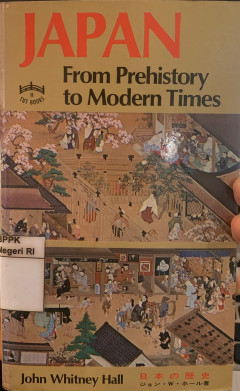
Japan: From prehistory to modern times
Japan: From Prehistory to Modern Times traces the principal threads of Japan's political and cultural life from early times through the mid-twentieth century. In an informative and engaging narrative, the author presents a carefully balanced and authoritative picture of Japan's transformation from a secluded, little known and backward country, with a fundamentally "Eastern" culture, to one of t…
- Edisi
- -
- ISBN/ISSN
- 4-8053-0276-3
- Deskripsi Fisik
- xii, 397 pages ; 19 cm
- Judul Seri
- -
- No. Panggil
- 952 Hal j

The invasion of Japan: Alternative to the bomb
For more than a half century scholars and nonscholars alike have debated the ethics of dropping the atomic bomb, but rarely have they studied the American plan to invade Japan, the alternative to using the bomb to end the Second World War. Widely held beliefs about the strength of Japanese forces and the projected loss of American lives have been invoked to justify the decision to drop the bomb…
- Edisi
- -
- ISBN/ISSN
- 1-57003-354-4
- Deskripsi Fisik
- xii, 276 pages : illustrations ; 23 cm
- Judul Seri
- -
- No. Panggil
- 952 Ska i

What is Japan? Contradiction and transformations
In a witty, acerbic, and provocative book, the author of the influential futurist synthesis The Knowledge-Value Revolution shows how Japan, borrowing elements from both China and the West, has created a culture unlike any other one that is still changing in a uniquely Japanese way.
- Edisi
- -
- ISBN/ISSN
- 1-56836-087-8
- Deskripsi Fisik
- xxii, 312 pages ;21 cm
- Judul Seri
- -
- No. Panggil
- 952 Sak w
 Karya Umum
  Filsafat
  Agama
Agama  Ilmu-ilmu Sosial
  Bahasa
  Ilmu-ilmu Murni
  Ilmu-ilmu Terapan
  Kesenian, Hiburan, dan Olahraga
  Kesusastraan
  Geografi dan Sejarah