Ditapis dengan

Tojo le dernier banzai Texte imprimé
one of the most powerful and controversial figures in Japan during World War II. Written by Courtney Browne, the author draws on his years in Japan as an occupation soldier and civilian to offer deep insight into Tōjō’s character, his military career, political rise, and role as Prime Minister. Browne explores how Tōjō’s rigid discipline, nationalism, and personal convictions shaped his…
- Edisi
- -
- ISBN/ISSN
- -
- Deskripsi Fisik
- 279 pages : illustrations ; 20,5 cm
- Judul Seri
- -
- No. Panggil
- 952 BRO t

The Horizon concise history of Japan
A clear, readable, and compact overview of Japan’s history. The book spans from ancient times through the feudal era, the modernization during the Meiji Restoration, and into the twentieth century, covering Japan’s rise as a world power. Busch highlights political, economic, and social transformations, such as the shift from isolation to international engagement, industrial growth, and the …
- Edisi
- -
- ISBN/ISSN
- 07-009299-0
- Deskripsi Fisik
- 217 pages : illustrations ; 24 cm
- Judul Seri
- -
- No. Panggil
- 952 BUS h
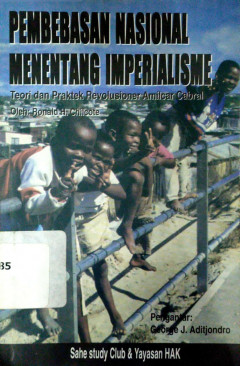
Pembebasan nasional menentang imperealisme
Buku Pembebasan Nasional Menentang Imperalisme karya George J. Aditjondro membahas dinamika perjuangan rakyat di berbagai negara Dunia Ketiga dalam melawan dominasi politik, ekonomi, dan militer kekuatan imperialis. Melalui analisis historis dan sosial-politik, penulis menyoroti bagaimana imperialisme modern beroperasi melalui struktur kekuasaan global, perusahaan transnasional, dan bentuk inte…
- Edisi
- -
- ISBN/ISSN
- -
- Deskripsi Fisik
- xl, 178 halaman ; 18 cm
- Judul Seri
- -
- No. Panggil
- 959.85 ADI p

Faces of Japan
Faces of Japan by Bob Davis is a photographic book capturing everyday life in Japan during the 1970s. Through 88 black-and-white photographs, Davis portrays both traditional and modern aspects of Japanese society, from urban centers to rural areas, highlighting daily routines, local markets, sumo wrestling, and street scenes in cities like Shibuya. The book aims to reveal the “real faces of J…
- Edisi
- 1
- ISBN/ISSN
- 0-87011-338-0
- Deskripsi Fisik
- xiv, 108 pages : illustrations ; 25 cm
- Judul Seri
- -
- No. Panggil
- 952 DAV f
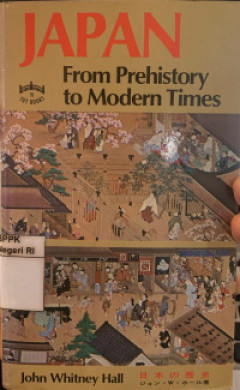
Japan from prehistory to modern times
the political, social, and cultural evolution of Japan from its earliest eras through the mid‑20th century. Hall places special emphasis on Japan’s premodern period, analyzing how its feudal institutions, social hierarchies, and political structures changed over more than two millennia. He explores the influence of both the Chinese civilization (especially from the 6th century) and the West…
- Edisi
- 13
- ISBN/ISSN
- 4-8053-0276-3
- Deskripsi Fisik
- xii, 397 pages : illustrations ; 18 cm
- Judul Seri
- -
- No. Panggil
- 952 HAL j

Al-'ummaniyyun wal-malahah wat-tijarah wa nashrul-islam: Mundzu zhuhurihi ila…
This book examines the crucial role of the Omani nation in shipping, trade, and the spread of Islam from the early days of the religion to the arrival of the Portuguese in the Arabian coast and the Indian Ocean. Through in-depth historical analysis, the author illustrates how Omani sailors and merchants contributed significantly to opening maritime trade routes, establishing transregional econo…
- Edisi
- -
- ISBN/ISSN
- -
- Deskripsi Fisik
- 372 pages: 25 cm
- Judul Seri
- -
- No. Panggil
- 953.53 HAL a
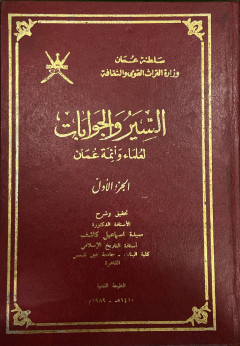
Al-siyar wa al-jawabāt li 'ulamā' wa a'immat 'Umān
Al-Siyar wa al-Jawabāt li ʿUlamāʾ wa Aʾimmat ʿUmān is a landmark compilation of correspondence, fatwas, religious responses, and legal guidance issued by Omani scholars and imams throughout various historical periods. It documents Ibadi fiqh thought, socio-religious views, and legal rulings that served as primary references in shaping Omani religious identity and traditional legal system…
- Edisi
- -
- ISBN/ISSN
- -
- Deskripsi Fisik
- 435 pages: 25 cm
- Judul Seri
- -
- No. Panggil
- 953.53 KHA a

The Meiji restoration
A comprehensive and scholarly examination of the pivotal events of 1868 in Japan, when Imperial power was restored. He argues that the Restoration was not primarily driven by economic distress or class conflict, but by a rising sense of national danger and pride as Japan encountered Western powers. Nationalism motivated the overthrow of the Tokugawa shogunate and the re-unification of Japan und…
- Edisi
- -
- ISBN/ISSN
- 0-8047-0815-0
- Deskripsi Fisik
- 513 pages ; 24 cm
- Judul Seri
- -
- No. Panggil
- 952.031 BEA m
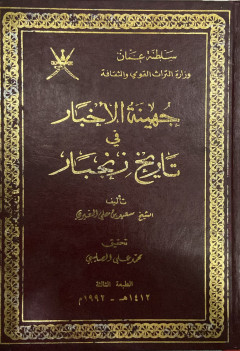
Juhainat al-Akhbar fi Tarikh Zanzibar
Juhainat al-Akhbar fi Tarikh Zanzibar is a seminal historical work that traces the long history of Zanzibar, particularly its close relationship with the Sultanate of Oman. Sheikh Said Ali bin Ali Al-Aghbari presents a rich historical account, covering the origins of Zanzibari's people, its social and political developments, and Oman's crucial role in shaping the region's cultural identity and …
- Edisi
- -
- ISBN/ISSN
- -
- Deskripsi Fisik
- 589 pages: 25 cm
- Judul Seri
- -
- No. Panggil
- 953.53 ALA j
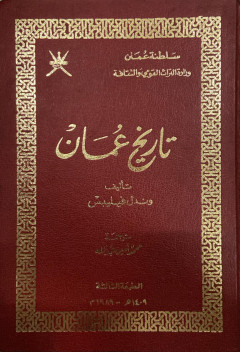
Tarikh Oman
History, with its turbulent events and diverse characters, is one of the most fascinating stories, and history books are among the best narratives. The History of Oman is no exception; the author attempts to recount the events one by one, with concise commentary, in such a way that you can feel them unfold as you turn the pages. This book covers the rich history of the Arab nation of the Indian…
- Edisi
- third edition
- ISBN/ISSN
- -
- Deskripsi Fisik
- 208 pages; 25 cm
- Judul Seri
- -
- No. Panggil
- 953.53 PHI t
 Karya Umum
  Filsafat
  Agama
Agama  Ilmu-ilmu Sosial
  Bahasa
  Ilmu-ilmu Murni
  Ilmu-ilmu Terapan
  Kesenian, Hiburan, dan Olahraga
  Kesusastraan
  Geografi dan Sejarah