Ditapis dengan

Dir 'iyyah and the first Saudi state
Dirʿiyyah and the First Saudi State by William Facey provides a concise historical examination of the rise of Dirʿiyyah as the birthplace of the First Saudi State in the 18th century. The book traces the alliance between Muhammad ibn Saud and the religious reformer Muhammad ibn Abd al-Wahhab, which laid the ideological and political foundations for the emerging state. Facey highlights Dirʿiy…
- Edisi
- -
- ISBN/ISSN
- 0905743-806
- Deskripsi Fisik
- 112 pages : illustrations ; 30 cm
- Judul Seri
- -
- No. Panggil
- 953.8 FAC d

12 September in Turkey before and after
PREFACE TABLE OF CONTENTS CHAPTER 1 BIRTH OF THE TURKISH REPUBLIC Towards the National geal. New Constitutional Order Abuse of Freedom CHAPTER 2 PERIODS OF ABOVE PARTY GOVERNMENTS Democracy, A SYSTEM OF VIRTUES Confumions Have No End in Politics OTHER PROBLEMS OUTSTANDING IN THE PRESENT PERIO
- Edisi
- -
- ISBN/ISSN
- -
- Deskripsi Fisik
- 383 pages;23 cm
- Judul Seri
- -
- No. Panggil
- 956.1037 TIM s
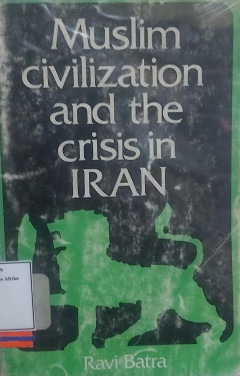
Muslim civilization and the crisis in Iran
This book examines the historical development of Muslim civilization and analyzes the political and social forces that led to the crisis in Iran during the late 1970s. The author recounts his prediction, made in 1978, that the Shah of Iran would be replaced by religious leaders, a forecast that materialized in 1979. Drawing on the theory of social cycles developed by Indian scholar P. R. Sarkar…
- Edisi
- -
- ISBN/ISSN
- -
- Deskripsi Fisik
- 218 pages ; 21 cm
- Judul Seri
- -
- No. Panggil
- 955 BAT m

Saudi Arabia: Profile of a kingdom
audi Arabia: Profile of a Kingdom offers a richly illustrated and insightful portrait of the Kingdom, tracing its cultural heritage, historical development, and modern transformation. Through prose and photography, the authors explore how Saudi Arabia leveraged its vast oil wealth to build economic power, while preserving deeply rooted traditions. The book also delves into the Kingdom’s polit…
- Edisi
- -
- ISBN/ISSN
- 1-873544-67-7
- Deskripsi Fisik
- 124 pages : illustrations ; 31 cm
- Judul Seri
- -
- No. Panggil
- 953.8 DOB s

Aden under British rule 1839-197
Aden Under British Rule, 1839–1967 by R. J. Gavin provides a comprehensive historical analysis of the British presence in Aden from its occupation in 1839 to the end of colonial rule in 1967. Drawing on official records, economic data, and political correspondence, the book explores Aden’s evolution from a strategic coaling station into one of the most important ports in the Arabian Peninsu…
- Edisi
- -
- ISBN/ISSN
- 0-903983-14-1
- Deskripsi Fisik
- x, 472 pages ; 22 cm
- Judul Seri
- -
- No. Panggil
- 953.35 GAV a

The architectural achievement of King Abdul-aziz in the honored area of Makka…
This book explores the architectural developments initiated under the reign of King Abdul-Aziz in the honored area of Makkah between 1924 and 1953. It highlights the King’s efforts to modernize the holy city while preserving its sacred character, focusing on major projects such as the expansion of the Grand Mosque, improvements to pilgrim facilities, and the introduction of new urban infrastr…
- Edisi
- -
- ISBN/ISSN
- 9960-880-59-1
- Deskripsi Fisik
- 380 pages : illustrations ; 32 cm
- Judul Seri
- -
- No. Panggil
- 953.121 ALI a

Bushido: The Soul of Japan
A captivating exploration of the code of honor and ethics that governed the samurai warriors in feudal Japan. The author's book aims to provide Western readers with an in-depth understanding of the principles and values that shaped the samurai's way of life. Nitobe delves into the historical and philosophical aspects of Bushido, which refers to the "way of the warrior." He explores various elem…
- Edisi
- -
- ISBN/ISSN
- 4-8053-0218-6
- Deskripsi Fisik
- xxiii, 203 pages ; 18 cm
- Judul Seri
- -
- No. Panggil
- 915 NIT b
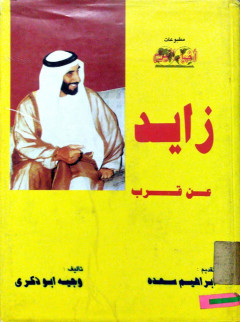
Zayed An Qurbin
Zayed ʿAn Qurbin presents an intimate portrayal of the life, values, and leadership philosophy of Sheikh Zayed bin Sultan Al Nahyan, the founding leader of the United Arab Emirates. Written by Wajih Abu Zikr, the book draws upon close observations, historical accounts, and personal reflections to depict Zayed’s character, humanitarian vision, and political wisdom. It highlights his dedicatio…
- Edisi
- -
- ISBN/ISSN
- 977-08-0169-0
- Deskripsi Fisik
- 231 pages : Ilustrations ; 25 cm
- Judul Seri
- -
- No. Panggil
- 923.1538 ZIK z

Japan: An Anthropological introduction
A comprehensive ethnographic and anthropological overview of Japanese society, tracing its cultural origins, social structure, and value systems. Befu explores Japan’s historical development — from prehistoric periods through the formation of kinship systems, family structures, and rural community life. He examines how ritual kinship, paternalism, and the stem family concept shape familial …
- Edisi
- -
- ISBN/ISSN
- 4-8053-0461-8
- Deskripsi Fisik
- xii, 210 pages : illustrations ; 18 cm
- Judul Seri
- -
- No. Panggil
- 915.2 BEF j

Pakistan: Democracy, terrorism and the building of a nation
In August 2008, Pervez Musharraf stood down as Pakistan's president after having already resigned the posts of Chief of Army Staff and Prime Minister. It was a final end to a dictorial rule that started when he seized power in a military coup in 1999, and seemed to many to be the inevitable conclusion to a government that had started in idealism but had ended in corruption - another example of …
- Edisi
- -
- ISBN/ISSN
- 978-1-56656-816-6
- Deskripsi Fisik
- 211 pages; 23 cm
- Judul Seri
- -
- No. Panggil
- 954.91 MAL p
 Karya Umum
  Filsafat
  Agama
Agama  Ilmu-ilmu Sosial
  Bahasa
  Ilmu-ilmu Murni
  Ilmu-ilmu Terapan
  Kesenian, Hiburan, dan Olahraga
  Kesusastraan
  Geografi dan Sejarah