Ditapis dengan
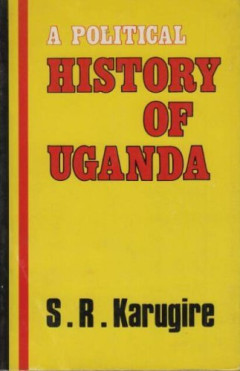
A Political history of Uganda
A Political History of Uganda provides a comprehensive overview of Uganda’s political evolution from the precolonial era to the modern state. The book examines the impact of colonial administration, the struggle for independence, and the subsequent political transformations that shaped Uganda’s governance structures. Through an analysis of leadership changes, ethnic dynamics, constitutional…
- Edisi
- 1
- ISBN/ISSN
- 0-435-94525 4
- Deskripsi Fisik
- 247 pages; 22 cm
- Judul Seri
- -
- No. Panggil
- 967.6104 KAR p

They came to Japan : An Anthology of European reports on Japan. 1543-1640
They Came to Japan is a translated anthology compiling over thirty European reports, letters, and missionary accounts written between 1543 and 1640. Edited by Michael Cooper, the volume offers a vivid portrait of sixteenth- and seventeenth-century Japan through the eyes of Europeans — merchants, Jesuit missionaries, and other travelers. The contributors include those who lived in Japan for ex…
- Edisi
- 1
- ISBN/ISSN
- 0-520-04509-2
- Deskripsi Fisik
- xiv, 439 pages ; 20 cm
- Judul Seri
- -
- No. Panggil
- 952.025 COO t

Studies in the intellectual history of tokugawa Japan
Studies in the Intellectual History of Tokugawa Japan offers an in-depth exploration of the major intellectual trends, scholarly movements, and philosophical debates that shaped Japan during the Tokugawa period (1600–1868). The book examines the development of Confucianism, Neo-Confucianism, Kokugaku (nativist studies), and other schools of thought that influenced political ideology, social e…
- Edisi
- 3
- ISBN/ISSN
- 4-13-027008-7
- Deskripsi Fisik
- xiii, 383 pages ; 23,5 cm
- Judul Seri
- -
- No. Panggil
- 952.025 MAR s
The Discovery of India
The Discovery of India adalah karya Jawaharlal Nehru yang sangat reflektif dan ilmiah, ditulis selama masa penahanannya di Benteng Ahmadnagar (1942–1945). Dalam narasi epistolary dan filosofis ini, Nehru menelusuri perjalanan budaya, sejarah, dan intelektual India yang luas — dari peradaban kunonya hingga penjajahan Inggris. Ia mengeksplorasi filsafat, agama, dan kehidupan politik India den…
- Edisi
- -
- ISBN/ISSN
- -
- Deskripsi Fisik
- xii, 426 pages ; 18 cm
- Judul Seri
- -
- No. Panggil
- 954.042 NEH d
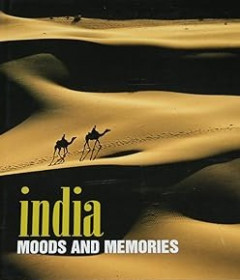
India: Moods and memories
India: Moods and Memories is a pictorial and narrative anthology edited by Vandana Malhotra, produced for the Public Diplomacy Division of India’s Ministry of External Affairs. This volume captures the essence of India through diverse essays, photographic essays, and reflections that explore the emotional landscapes and historical memories of the country. It includes richly illustrated sectio…
- Edisi
- -
- ISBN/ISSN
- -
- Deskripsi Fisik
- 381 pages : illustrations ; 28 cm
- Judul Seri
- -
- No. Panggil
- 954 VAN i

Lee Kuan Yew: Perjuangan untuk Singapura
“Lee Kuan Yew: Perjuangan untuk Singapura” karya Alex Josey menggambarkan perjalanan hidup Lee Kuan Yew sebagai arsitek utama modernisasi Singapura. Buku ini menelusuri perjuangannya dalam menghadapi tantangan politik, ekonomi, dan sosial sejak masa kolonial hingga berdirinya negara kota yang mandiri. Melalui narasi yang detail, pembaca diajak melihat strategi kepemimpinan Lee dalam membent…
- Edisi
- -
- ISBN/ISSN
- -
- Deskripsi Fisik
- v; 372 halaman ; 21 cm
- Judul Seri
- -
- No. Panggil
- 923.25957 JOS l
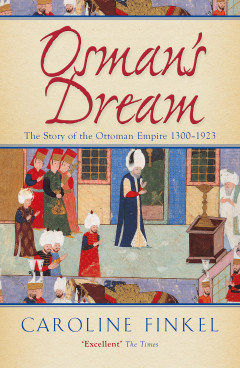
Osman's Dream: The Story of the Ottoman Empire 1300-1923
Osman’s Dream: The Story of the Ottoman Empire 1300–1923 by Caroline Finkel is a comprehensive narrative history tracing the rise, expansion, and eventual dissolution of the Ottoman Empire over more than six centuries. Drawing on a wide range of primary and secondary sources, the book presents a chronological account beginning with the semi-legendary figure Osman Gazi and the formation of a…
- Edisi
- -
- ISBN/ISSN
- 978-0-7195-6112-2
- Deskripsi Fisik
- xix, 674 pages : Ilustrations ; 20 cm
- Judul Seri
- -
- No. Panggil
- 956.101 FIN o
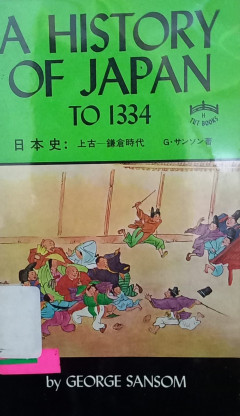
A History of Japan to 1334
A History of Japan to 1334 provides a comprehensive overview of Japan’s political, social, and cultural development from its earliest periods up to the year 1334. The book explores the formation of early Japanese states, the rise of influential clans, and the establishment of imperial and military governance structures. It examines religious, economic, and cultural transformations, including …
- Edisi
- 5
- ISBN/ISSN
- 4-8053-0375-1
- Deskripsi Fisik
- 500 pages : illustrations ; 18 cm
- Judul Seri
- -
- No. Panggil
- 952.025 SAN h
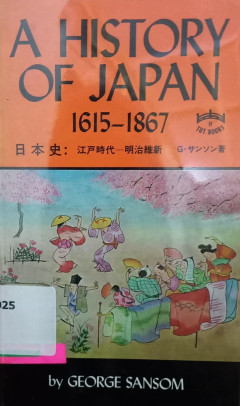
A History of Japan 1615-1867
A History of Japan, 1615–1867 presents a comprehensive account of Japan’s political, social, economic, and cultural development during the Edo period, a long era of stability under Tokugawa rule. The book describes how the Tokugawa shogunate established a centralized feudal system, controlled the daimyo through policies such as sankin-kōtai, and maintained social order through strict class…
- Edisi
- 5
- ISBN/ISSN
- 4-8053-0375-1
- Deskripsi Fisik
- 258 pages : illustrations ; 18 cm
- Judul Seri
- -
- No. Panggil
- 952.025 SAN h

The Japan reader 1: Imperial Japan: 1800-1945
A curated collection of primary documents, essays, and analyses that trace Japan’s transformation from a feudal society into a modern imperial power. The book covers key developments such as the late Tokugawa period, the Meiji Restoration, industrialization, nationalism, and militarization leading up to World War II. Livingston highlights the political, social, and economic forces that shaped…
- Edisi
- -
- ISBN/ISSN
- -
- Deskripsi Fisik
- xix, 517 pages ; 19,5 cm
- Judul Seri
- -
- No. Panggil
- 952 LIV j
 Karya Umum
  Filsafat
  Agama
Agama  Ilmu-ilmu Sosial
  Bahasa
  Ilmu-ilmu Murni
  Ilmu-ilmu Terapan
  Kesenian, Hiburan, dan Olahraga
  Kesusastraan
  Geografi dan Sejarah