Ditapis dengan
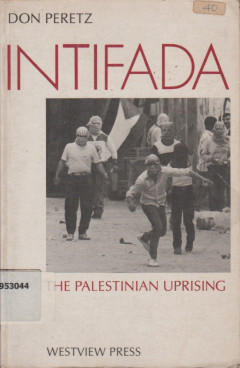
Intifada: The Palestinian uprising
This book comprehensively examines the wave of Palestinian uprising known as the Intifada, which began in 1987 in the West Bank and Gaza Strip. Don Peretz, a leading expert in Middle Eastern studies, explains the political, social, and economic factors that fueled the uprising. The book also highlights the dynamics of Israeli–Palestinian relations, the role of Palestinian political organizati…
- Edisi
- -
- ISBN/ISSN
- 0-8133-0859-3
- Deskripsi Fisik
- ix, 246 pages : illustration ; 23 cm
- Judul Seri
- -
- No. Panggil
- 956.95 PER i
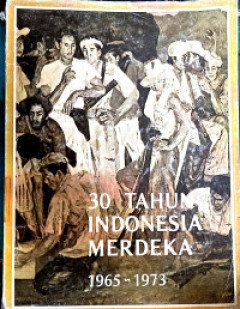
30 Tahun Indonesia Merdeka 1965-1973
Buku 30 Tahun Indonesia Merdeka merupakan dokumentasi resmi Pemerintah Republik Indonesia yang menyajikan perkembangan politik, ekonomi, sosial, dan keamanan Indonesia sejak Proklamasi 1945 hingga tahun 1975. Disusun oleh tim yang dipimpin Brigjen TNI Drs. Nugroho Notosusanto dan berada di bawah koordinasi Menteri/Sekretaris Negara Sudharmono, S.H., buku ini merangkum perjalanan pembangunan nas…
- Edisi
- -
- ISBN/ISSN
- -
- Deskripsi Fisik
- 270 halaman : ilustrasi ; 26 cm
- Judul Seri
- -
- No. Panggil
- 959.803 SUD t
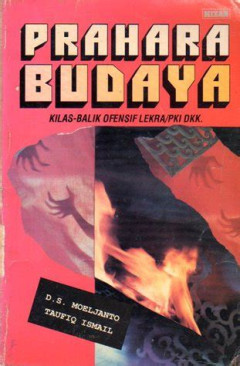
Prahara budaya : Kilas balik ofensif lekra/PKI dkk
Buku ini merupakan kumpulan dokumen sejarah yang merekam pergolakan budaya pada masa ofensif LEKRA/PKI dalam dunia kesenian dan kebudayaan Indonesia. D.S. Moeljanto dan Taufiq Ismail menyusun naskah ini untuk menghadirkan kembali dinamika perdebatan ideologi, konflik lembaga kebudayaan, serta tekanan politik yang terjadi menjelang dan sesudah masa 1960-an. Melalui dokumen-dokumen autentik, buku…
- Edisi
- cet 3
- ISBN/ISSN
- 979-433-064-7
- Deskripsi Fisik
- 469 halaman : ilustrasi ; 23,5 cm
- Judul Seri
- -
- No. Panggil
- 959.803 9 MOE p
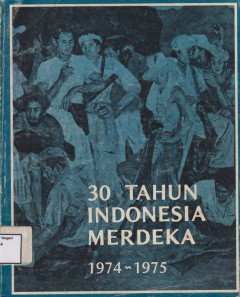
30 Tahun Indonesia merdeka 1974-1975
Buku 30 Tahun Indonesia Merdeka merupakan publikasi resmi pemerintah Republik Indonesia yang menyajikan rangkuman komprehensif tentang perjalanan bangsa sejak Proklamasi Kemerdekaan tahun 1945 hingga tahun 1975. Disusun oleh Pusat Sejarah ABRI di bawah koordinasi Brigjen TNI Drs. Nugroho Notosusanto, buku ini menampilkan data sejarah, perkembangan politik, ekonomi, sosial, budaya, pertahanan-ke…
- Edisi
- -
- ISBN/ISSN
- -
- Deskripsi Fisik
- 245 halaman : ilustrasi ; 26 cm
- Judul Seri
- -
- No. Panggil
- 959.803 SUD t

Mugabe: Power, plunder, and the struggle for Zimbabwe
This revised and updated edition by Martin Meredith offers a comprehensive and critical examination of Robert Mugabe’s rise to power, his decades-long rule, and the political, social, and economic turmoil that unfolded in Zimbabwe under his leadership. Drawing on extensive research and firsthand accounts, Meredith exposes how Mugabe transformed from a celebrated liberation hero into one of Af…
- Edisi
- -
- ISBN/ISSN
- 978-1-86842-291-3
- Deskripsi Fisik
- 259 pages : illustration ; 20 cm
- Judul Seri
- -
- No. Panggil
- 968.9105 MER m
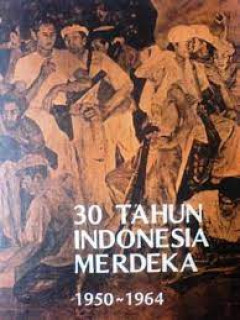
30 Tahun Indonesia merdeka 1950-1964
Buku 30 Tahun Indonesia Merdeka merupakan publikasi resmi pemerintah Republik Indonesia yang mendokumentasikan perjalanan bangsa selama tiga dekade pertama sejak Proklamasi 17 Agustus 1945. Disusun oleh Pusat Sejarah ABRI di bawah koordinasi Brigjen TNI Drs. Nugroho Notosusanto, buku ini memuat perkembangan sejarah politik, sosial, ekonomi, pertahanan-keamanan, serta berbagai capaian pembanguna…
- Edisi
- -
- ISBN/ISSN
- -
- Deskripsi Fisik
- 254 halaman : ilustrasi ; 26 cm
- Judul Seri
- -
- No. Panggil
- 959.803 SUD t

What happens after Mugabe? : Can Zimbabwe rise from the ashes?
What Happens After Mugabe? examines the uncertain political, economic, and social future of Zimbabwe at a time when Robert Mugabe’s leadership was nearing its end. Geoff Hill investigates the collapse of Zimbabwe’s economy, the erosion of democratic institutions, state-sponsored violence, and the humanitarian crisis that emerged during Mugabe’s rule. Drawing on interviews, historical anal…
- Edisi
- -
- ISBN/ISSN
- 978-1-77007-102-5
- Deskripsi Fisik
- xiv, 178 pages : illustration ; 21 cm
- Judul Seri
- -
- No. Panggil
- 968.91 HIL w

Zimbabwe: The Past is the future – rethinking land, state and nation in the…
This book provides a critical examination of Zimbabwe’s political, social, and economic trajectory in the years following independence. Edited by David Harold-Barry, it brings together the perspectives of multiple scholars who analyze the deepening national crisis, focusing on land redistribution, governance, state power, and national identity. Through historical insight and contemporary anal…
- Edisi
- -
- ISBN/ISSN
- 1-77922-025-1
- Deskripsi Fisik
- xv, 274 pages : illustration ; 21,5 cm
- Judul Seri
- -
- No. Panggil
- 968.91 HAR z
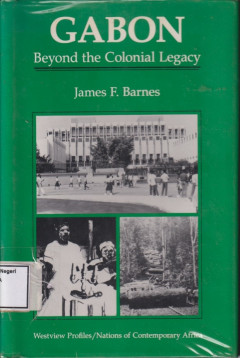
Gabon: Beyond the colonial legacy
This book provides an in-depth analysis of Gabon’s political, social, and economic evolution after the end of French colonial rule. James F. Barnes examines the structures of government, the role of political elites, patterns of economic development, and the impact of foreign influence on Gabon's internal affairs. Through historical context and contemporary observations, the book highlights h…
- Edisi
- Cetakan pertama
- ISBN/ISSN
- 0-8133-1486-1
- Deskripsi Fisik
- xii, 163 pages : illustration ; 23,5 cm
- Judul Seri
- -
- No. Panggil
- 966.751 BAR g

Ethiopia photographed: historic photographs of the country and Its people tak…
This book contains a collection of historical photographs of Ethiopia taken between 1867 and 1935, a period during which Ethiopia experienced significant social, political, and cultural change. Compiled by Richard Pankhurst and Denis Gérard, the book presents important visual documentation of Ethiopian society, including portraits of individuals, everyday life, traditions, and major events in …
- Edisi
- =
- ISBN/ISSN
- 978-07103-0504-6
- Deskripsi Fisik
- 168 pages : illustration ; 28 cm
- Judul Seri
- -
- No. Panggil
- 963.04 RIC e
 Karya Umum
  Filsafat
  Agama
Agama  Ilmu-ilmu Sosial
  Bahasa
  Ilmu-ilmu Murni
  Ilmu-ilmu Terapan
  Kesenian, Hiburan, dan Olahraga
  Kesusastraan
  Geografi dan Sejarah