Ditapis dengan

Slaves, spices & ivory in Zanzibar: Integration of an East African commercial…
This book is an in-depth study of Zanzibar's development as an international trading center in East Africa between 1770 and 1873. Abdul Sheriff analyzes how the slave, spice, and ivory trades shaped Zanzibar's economic structure and integrated it into the world economy. Using an economic history approach, the author traces the role of Arab, Swahili, and Indian traders, as well as colonial power…
- Edisi
- -
- ISBN/ISSN
- 0-85255-015-4
- Deskripsi Fisik
- xx, 297 pages : illustration ; 21,5 cm
- Judul Seri
- -
- No. Panggil
- 330.9678 SHE e
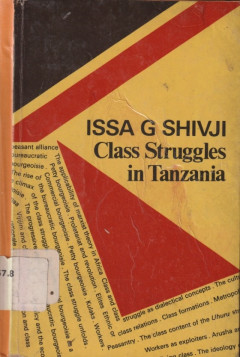
Class struggles in Tanzania
Class Struggles in Tanzania is a landmark analytical work by leading academic Issa G. Shivji, examining power relations, social classes, and the political and economic development of Tanzania from the colonial period to the early years of independence. Using a Marxist approach, Shivji charts how the post-independence state forged alliances and contradictions between classes—including the bure…
- Edisi
- -
- ISBN/ISSN
- -
- Deskripsi Fisik
- 182 pages ; 21,5 cm
- Judul Seri
- -
- No. Panggil
- 320.9678 SHI c

The Making of a periphery: Economic development and cultural encounters in so…
The Making of a Periphery traces the economic, social, and cultural history of southern Tanzania, particularly the Makonde people, from the colonial era to the post-independence period. It demonstrates how the southern region was shaped as a "periphery" within the national economic structure by colonial policies, post-independence state-building, and modern market interactions. Through multidis…
- Edisi
- -
- ISBN/ISSN
- 9976-973-40-3
- Deskripsi Fisik
- 344 pages : illustration ; 22 cm
- Judul Seri
- -
- No. Panggil
- 330.9678 SEP m
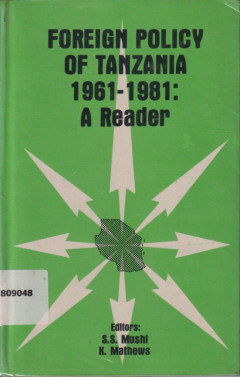
Foreign policy of Tanzania 1961–1981 : A Reader
This book is a valuable compilation of the evolution of Tanzania's foreign policy from independence in 1961 to the early 1980s. Compiled by Professor K. Mathews and Professor S.S. Mushi, it presents key documents, speeches, academic papers, and political analysis that provide an in-depth look at the principles, strategies, and dynamics of Tanzanian diplomacy under Julius K. Nyerere. Key issues …
- Edisi
- -
- ISBN/ISSN
- -
- Deskripsi Fisik
- xviii, 327 pages ; 22 cm
- Judul Seri
- -
- No. Panggil
- 327.678 MAT f
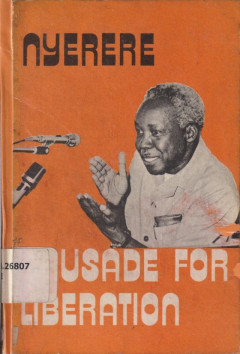
Crusade for liberation
Crusade for Liberation is a collection of speeches, political statements, and writings by Julius K. Nyerere delivered during the Southern African liberation struggle. Nyerere affirms Tanzania's moral and political position in support of anti-colonial movements and opposition to apartheid. Through his ideas, Nyerere discusses the importance of African solidarity, social justice, national soverei…
- Edisi
- -
- ISBN/ISSN
- 0-19-572462-3
- Deskripsi Fisik
- 94 pages : illustration ; 21 cm
- Judul Seri
- -
- No. Panggil
- 320.9678 NYE c

Government and politics in Kenya: A Nation building text
Government and Politics in Kenya: A Nation-Building Text is a comprehensive work on the process of political development and state formation in Kenya in the post-colonial era. Edited by C. J. Gertzel, Maure Goldschmidt, and Don Rothchild, this book contains a multidisciplinary study of government structures, political dynamics, the relationship between elites and the masses, and the challenges …
- Edisi
- -
- ISBN/ISSN
- -
- Deskripsi Fisik
- xx, 611 pages : illustration ; 25 cm
- Judul Seri
- -
- No. Panggil
- 320.9676 GER g

Freedom and socialism: A Selection from witings and speeches 1965–1967
Freedom and Socialism / Uhuru na Ujamaa is a collection of writings and speeches by Tanzania’s President Julius K. Nyerere, delivered between 1965 and 1967. The work reflects Nyerere’s political thought on Ujamaa, an African form of socialism that emphasizes unity, cooperation, social justice, and human-centered development. Through these essays, Nyerere outlines his views on independence, …
- Edisi
- -
- ISBN/ISSN
- -
- Deskripsi Fisik
- xvi, 422 pages : illustration ; 21 cm
- Judul Seri
- -
- No. Panggil
- 320.9678 NYE f

Unions and leaders in Ghana: A Model of labor and development
This study by Paul S. Gray examines the structure, leadership, and development of trade unions in Ghana, focusing on their role in the country’s economic and social transformation. Drawing on interviews, archival materials, and field research, the book analyzes how union leadership shapes labor relations, worker participation, and national development policies. It highlights the evolution of …
- Edisi
- -
- ISBN/ISSN
- 0-914970-58-5
- Deskripsi Fisik
- x, 230 pages : illustration ; 21,5 cm
- Judul Seri
- -
- No. Panggil
- 331.8809667 GRA u
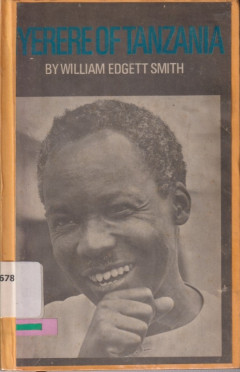
Nyerere of Tanzania
William Edgett Smith's Nyerere of Tanzania is a political and intellectual biography of Julius Kambarage Nyerere, the first president of the Republic of Tanzania and a leading figure in the African independence movement. It depicts Nyerere's life journey from his education through his involvement in the anti-colonial struggle, to his role in shaping the Tanzanian state through his policy of Afr…
- Edisi
- -
- ISBN/ISSN
- -
- Deskripsi Fisik
- 207 pages : illustration ; 21,5 cm
- Judul Seri
- -
- No. Panggil
- 320.9678 SMI n
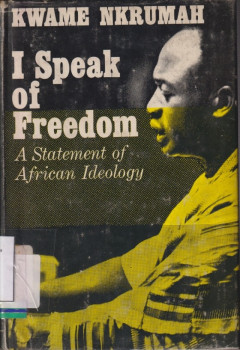
I Speak of freedom: A Statement of African ideology
In this influential work, Kwame Nkrumah outlines his vision for African unity, political freedom, and postcolonial development. I Speak of Freedom presents Nkrumah’s reflections on nationalism, anti-colonial struggle, and the responsibilities of independent African states. Through speeches, essays, and policy statements, he articulates the ideological foundations of Pan-Africanism and emphasi…
- Edisi
- -
- ISBN/ISSN
- -
- Deskripsi Fisik
- xii, 291 pages : illustration ; 21 cm
- Judul Seri
- -
- No. Panggil
- 320.9667 KWA i
 Karya Umum
  Filsafat
  Agama
Agama  Ilmu-ilmu Sosial
  Bahasa
  Ilmu-ilmu Murni
  Ilmu-ilmu Terapan
  Kesenian, Hiburan, dan Olahraga
  Kesusastraan
  Geografi dan Sejarah