Ditapis dengan

Egypt after mubarak: Liberalism, islam, and democracy in the Arab world
Egypt After Mubarak examines the political dynamics shaping Egypt’s future in the early 21st century. Bruce K. Rutherford analyzes the competing forces of liberalism, political Islam, and state authoritarianism, focusing on their potential to influence democratic development in the Arab world’s most populous nation. Drawing on constitutional analysis, interviews, and the historical evolutio…
- Edisi
- -
- ISBN/ISSN
- 978-0-691-13665-3
- Deskripsi Fisik
- Deskripsi fisik : x, 292 pages ; 24 cm
- Judul Seri
- -
- No. Panggil
- 320.962 RUT e

From opposition to governing party: Nigeria’s APC merger story
This book provides a detailed account of the political processes that led to the formation of the All Progressives Congress (APC), which emerged as Nigeria’s major governing party in 2015. Written by Ogbonnaya Onu, one of the key figures in the merger negotiations, the work offers firsthand insights into the motivations, challenges, and strategic decisions that shaped the unification of major…
- Edisi
- -
- ISBN/ISSN
- 978–978–53675–0–8
- Deskripsi Fisik
- xxviii, 452 pages : illustrations ; 22 cm
- Judul Seri
- -
- No. Panggil
- 324.2669 ONU f
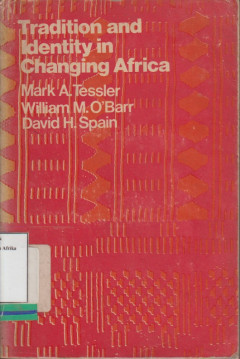
Tradition and identity in changing Africa
Tradition and Identity in Changing Africa examines the dynamics of social and cultural change in various African societies in the 20th century. Using ethnological approaches and case studies, authors Mark A. Tessler, William M. O’Barr, and David H. Spain explore how traditions, social structures, and cultural identities transformed in the context of modernization and political change. This bo…
- Edisi
- -
- ISBN/ISSN
- 0-06-046591-3
- Deskripsi Fisik
- xiv, 363 pages : illustration ; 20,5 cm
- Judul Seri
- -
- No. Panggil
- 301.296 TES t
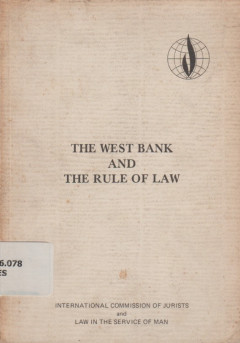
The West bank and the rule of law
This book is a legal study prepared by Raja Shehadeh with the assistance of Jonathan Kuttab for the International Commission of Jurists (ICJ). It analyzes the legal situation in the West Bank following the Israeli military occupation, including the application of laws and regulations, the legal status of the Palestinian population, the treatment of detainees, and various administrative policies…
- Edisi
- -
- ISBN/ISSN
- 92 9037 005 X
- Deskripsi Fisik
- 128 pages : illustration ; 21 cm
- Judul Seri
- -
- No. Panggil
- 346.078 SHE w
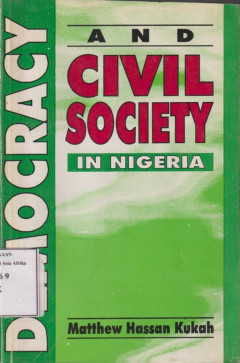
Democracy and civil society in Nigeria
This book provides a detailed examination of the evolution of democracy and the role of civil society in Nigeria. Written by Matthew Hassan Kukah, it explores the relationship between state institutions, civic groups, and citizens in the struggle for democratic governance. Kukah analyzes authoritarianism, military rule, human rights issues, and the challenges faced by civil society organization…
- Edisi
- -
- ISBN/ISSN
- 978–029–016–8
- Deskripsi Fisik
- xviii, 305 pages ; 21 cm
- Judul Seri
- -
- No. Panggil
- 321.8669 KUK d

Educational policies and progress during British rule in Ceylon (Sri Lanka), …
This book presents a comprehensive study of the development of educational policies and the progress of the education system in Sri Lanka during the British colonial period from 1796 to 1948. J. E. Jayasuriya examines the major reforms, legislative measures, missionary influence, structural changes, and the evolution of both primary and secondary education under British administration. Through …
- Edisi
- -
- ISBN/ISSN
- -
- Deskripsi Fisik
- 558 pages ; 21,5 cm
- Judul Seri
- -
- No. Panggil
- 379.5493 JAY e

Looking north to South-East Asia: The View from Australia
This volume examines Australia’s evolving perspectives toward the nations of South-East Asia during the mid-twentieth century. Bringing together analyses by multiple contributors, the book discusses political, strategic, economic, and diplomatic factors that shaped Australia’s regional outlook. It explores the historical context of Australia’s relationship with its northern neighbors, ass…
- Edisi
- -
- ISBN/ISSN
- 0-8248-0531-3
- Deskripsi Fisik
- x, 278 halaman ; 22 cm
- Judul Seri
- -
- No. Panggil
- 327.94059 WOL l
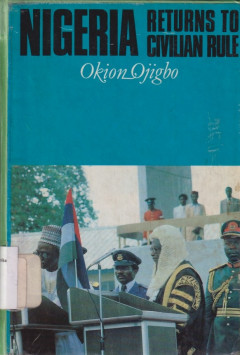
Nigeria returns to civilian rule
This book examines Nigeria’s transition from military rule to civilian government, focusing on the political events surrounding the restoration of democratic institutions in 1979. Written by Okion Ojigbo, it analyzes the challenges of governance, the roles of political actors, and the expectations placed upon the civilian administration. The author highlights the historical background of mili…
- Edisi
- -
- ISBN/ISSN
- -
- Deskripsi Fisik
- 360 pages : illustration ; 22 cm
- Judul Seri
- -
- No. Panggil
- 320.9669 OJI n
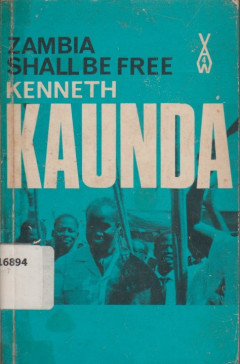
The Riddle of violence
The Riddle of Violence is a reflective political and philosophical work by Kenneth Kaunda, the first President of Zambia. In this volume, Kaunda explores the moral, social, and political roots of violence in modern society, drawing from his personal experiences during Zambia’s struggle for independence and his leadership in a newly emerging African nation. He contrasts violence with African h…
- Edisi
- -
- ISBN/ISSN
- 0-06-250450-9
- Deskripsi Fisik
- 202 pages : illustration ; 18,5 cm
- Judul Seri
- -
- No. Panggil
- 303.62 KAU r
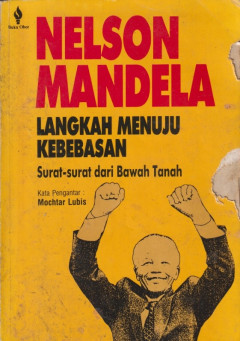
Langkah menuju kebebasan: Surat-surat dari bawah tanah
This book is a collection of Nelson Mandela's writings and letters written before and during the underground struggle against apartheid in South Africa. Through these writings, Mandela explains his views on racial injustice, the oppression of Black people, and the urgent need to fight for freedom and equality. This Indonesian translation presents important reflections on Mandela's political str…
- Edisi
- -
- ISBN/ISSN
- 979-461-129-8
- Deskripsi Fisik
- xvii, 214 pages ; 20,5 cm
- Judul Seri
- -
- No. Panggil
- 305.567 MAN l
 Karya Umum
  Filsafat
  Agama
Agama  Ilmu-ilmu Sosial
  Bahasa
  Ilmu-ilmu Murni
  Ilmu-ilmu Terapan
  Kesenian, Hiburan, dan Olahraga
  Kesusastraan
  Geografi dan Sejarah