Ditapis dengan

Africa on the move: Proceedings of the international ideological conference, …
Africa on the Move is a collection of materials, speeches, and discussion results from the International Ideological Conference held by the Party–State of Guinea in Conakry from November 13–18, 1978. The conference discussed African political developments, revolutionary movements, the ideology of African socialism, and strategies for political and social development in post-independence Afr…
- Edisi
- -
- ISBN/ISSN
- -
- Deskripsi Fisik
- 271 pages ; 24 cm
- Judul Seri
- -
- No. Panggil
- 320.96 STA a

A World beyond healing: The Prologue and aftermath of nuclear war
Nicholas Wade's A World Beyond Healing is a profound study of the devastating effects of nuclear war, both before and after the explosion. Wade describes how geopolitical tensions and the nuclear arms race create a constant threat to humanity. The book examines the medical, ecological, psychological, and social consequences of nuclear war, as well as the inability of the international system to…
- Edisi
- -
- ISBN/ISSN
- 0-393-02335-4
- Deskripsi Fisik
- 190 pages : illustration ; 21,5 cm
- Judul Seri
- -
- No. Panggil
- 355.0217 WAD w
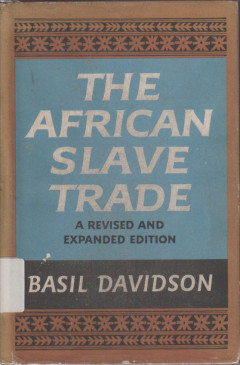
The African slave trade: A Revised and expanded edition
Basil Davidson's The African Slave Trade presents a comprehensive overview of the history of the African slave trade, its origins, the development of the transatlantic slave system, and its impact on African societies. This revised and expanded edition explores the role of European powers, the economic mechanisms of the slave trade, the sociocultural transformations that occurred in various Afr…
- Edisi
- -
- ISBN/ISSN
- -
- Deskripsi Fisik
- 304 pages ; 21,5 cm
- Judul Seri
- -
- No. Panggil
- 306.362 DAV a
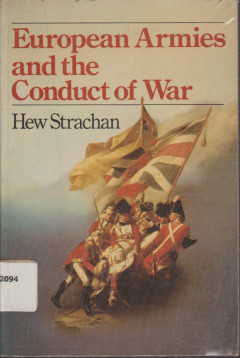
European armies and the conduct of war
European Armies and the Conduct of War by Hew Strachan presents an in-depth analysis of the development of doctrine, organization, and methods of warfare in Europe from the 18th century to the modern era. This book explores how changes in technology, social structure, politics, and military culture have influenced the way wars are planned and executed. Strachan delves into the evolution of the …
- Edisi
- -
- ISBN/ISSN
- 0-04-940070-3
- Deskripsi Fisik
- 226 pages ; 23,5 cm
- Judul Seri
- -
- No. Panggil
- 355.02094 STR e

The Theory of communicative action, Volume 1: Reason and the rationalization …
This first volume of Jürgen Habermas's landmark work lays out the foundations of the theory of communicative action, a key approach in modern social philosophy and sociology. Habermas analyzes how rationality develops in society through communication, not just through instrumental action. The book explores the relationship between social action, societal rationalization, and the communication …
- Edisi
- -
- ISBN/ISSN
- 0-8070-1506-7
- Deskripsi Fisik
- xlii, 465 pages ; 23,5 cm
- Judul Seri
- -
- No. Panggil
- 301.01 HAB t
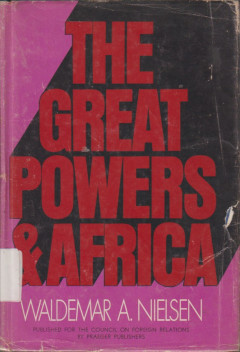
The Great powers and Africa
The book "The Great Powers and Africa" examines the involvement of major powers—such as the United States, the Soviet Union, the United Kingdom, France, and China—in the political, economic, and strategic dynamics of the African continent in the post-independence era. Waldemar A. Nielsen illustrates how global geopolitical interests shaped the development of African states, including …
- Edisi
- -
- ISBN/ISSN
- -
- Deskripsi Fisik
- xiii, 431 pages ; 22 cm
- Judul Seri
- -
- No. Panggil
- 327.6 NIE g
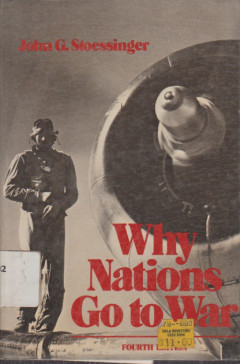
Why nations go to war
John G. Stoessinger's Why Nations Go to War is a classic analysis of the factors that drive states to war. Using a case study approach, this fourth edition examines major conflicts of the 20th century and highlights the role of political leaders, misperceptions, miscalculations, and international dynamics as crucial factors underlying the outbreak of war. Stoessinger emphasizes that the decisio…
- Edisi
- -
- ISBN/ISSN
- 0-312-87856-7
- Deskripsi Fisik
- xiii, 221 pages ; 21 cm
- Judul Seri
- -
- No. Panggil
- 355.02 STO w
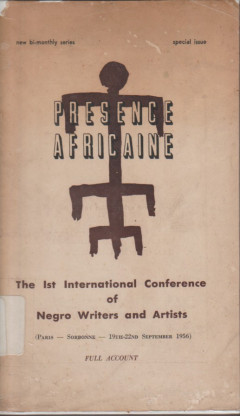
Présence Africaine
This special issue of Présence Africaine presents a comprehensive account of the 1st International Conference of Negro Writers and Artists, held at the Sorbonne in Paris, September 19–22, 1956. The conference brought together writers, artists, and intellectuals from Africa and the diaspora, including figures such as Léopold Sédar Senghor, Aimé Césaire, Richard Wright, and Alioune Diop. I…
- Edisi
- -
- ISBN/ISSN
- -
- Deskripsi Fisik
- 414 pages : illustration ; 23 cm
- Judul Seri
- -
- No. Panggil
- 305.896 SOC p
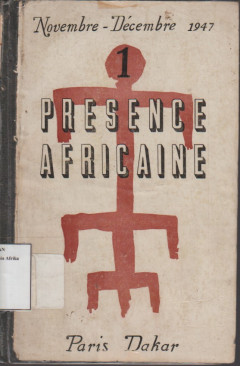
Présence Africaine
Présence Africaine is a leading intellectual journal first published in November–December 1947 in Paris and Dakar. This inaugural issue became an important platform for African and diaspora scholars, writers, and artists to voice their ideas on African identity, culture, colonialism, and socio-political development. The journal featured essays, literary criticism, cultural studies, and writi…
- Edisi
- -
- ISBN/ISSN
- -
- Deskripsi Fisik
- 192 pages : illustration ; 21,5 cm
- Judul Seri
- -
- No. Panggil
- 305.896 SOC p
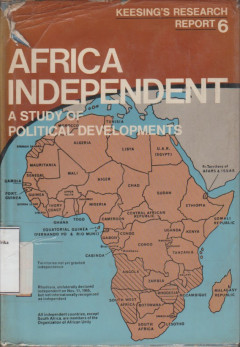
Africa independent: A Survey of political development
This book is a comprehensive research report on political developments in African countries after independence in the 20th century. Compiled by Keesing's Research Report, the book presents a summary of political events, changes in government, political party dynamics, internal conflicts, and the formation of state institutions in various African regions. Using an analytical and factual approach…
- Edisi
- -
- ISBN/ISSN
- 684-12532-3
- Deskripsi Fisik
- ix, 317 pages : illustration ; 21 cm
- Judul Seri
- -
- No. Panggil
- 320.96 KEE a
 Karya Umum
  Filsafat
  Agama
Agama  Ilmu-ilmu Sosial
  Bahasa
  Ilmu-ilmu Murni
  Ilmu-ilmu Terapan
  Kesenian, Hiburan, dan Olahraga
  Kesusastraan
  Geografi dan Sejarah