Ditapis dengan

Pergolakan mahasiswa abad ke-20: Kisah perjuangan anak-anak muda pemberang
Buku ini menggambarkan dinamika dan pergolakan mahasiswa pada abad ke-20, khususnya perjalanan perjuangan anak-anak muda yang dikenal pemberang dan kritis terhadap kondisi sosial-politik. Melalui narasi dan catatan pengalaman, Yozar Anwar menyoroti peran mahasiswa sebagai agen perubahan, konflik yang mereka hadapi, serta semangat idealisme yang mendorong gerakan mereka. Buku ini menjadi dokumen…
- Edisi
- -
- ISBN/ISSN
- -
- Deskripsi Fisik
- 272 halaman : ilustrasi ; 19 cm
- Judul Seri
- -
- No. Panggil
- 378.198 ANW p

The Globalization gap: How the rich get richer and the poor get left further …
This book examines the widening gap created by globalization, where the wealthy continue to accumulate greater advantages while the poor fall further behind. Robert A. Isaak analyzes how global economic structures, trade policies, and multinational corporate strategies reinforce inequalities across nations. Through critical insights and case studies, the author argues that without significant p…
- Edisi
- -
- ISBN/ISSN
- 0-13-142896-9
- Deskripsi Fisik
- xxiii, 275 pages : illustration ; 23,5 cm
- Judul Seri
- -
- No. Panggil
- 303.482 ISA g

Refugees South of the Sahara: An African dilemma
Refugees South of the Sahara: An African Dilemma is a comprehensive study of the refugee crisis in Sub-Saharan Africa. Edited by Hugh C. Brooks and Yassin El-Ayouty, the book compiles scholarly analyses of the causes, consequences, and political, social, and economic dynamics that fuel refugee flows in various African countries. Using a multidisciplinary approach, the work highlights internal c…
- Edisi
- -
- ISBN/ISSN
- 8371-3324-6
- Deskripsi Fisik
- xviii, 307 pages : illustration ; 21,5 cm
- Judul Seri
- -
- No. Panggil
- 305.9 BRO r
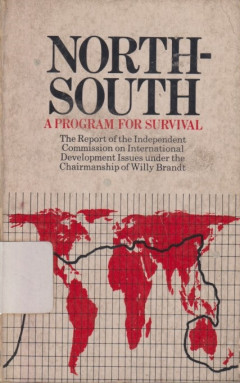
North–South: A Programme for survival
This seminal report prepared by the Independent Commission on International Development Issues, chaired by Willy Brandt, examines the deepening economic divide between the industrialized North and the developing South. The book outlines urgent strategies for global cooperation, highlighting issues of trade imbalance, poverty, development financing, and the need for new international economic st…
- Edisi
- -
- ISBN/ISSN
- 0-262-52004-6
- Deskripsi Fisik
- 304 pages ; 17,5 cm
- Judul Seri
- -
- No. Panggil
- 382.1 IND n

Fifty years of Vietnamese diplomacy 1945–1995 (Volume II: 1975–1995)
This volume presents a detailed account of Vietnam’s diplomatic activities during the two decades following national reunification in 1975. Written by diplomat and scholar Lưu Văn Lợi, the book highlights the country’s foreign policy strategies, regional engagements, and international negotiations from 1975 to 1995. It explores Vietnam’s efforts to rebuild its global relationships, na…
- Edisi
- -
- ISBN/ISSN
- -
- Deskripsi Fisik
- 335 pages ; 21 cm
- Judul Seri
- -
- No. Panggil
- 327.597 LUU f
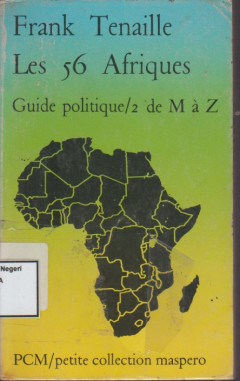
Les 56 Afriques: Guide politique, II. M à Z
This second volume of the Les 56 Afriques series continues the discussion of the political conditions of 56 African countries, specifically those listed alphabetically from M to Z. Frank Tenaille presents an analysis of the government structures, political dynamics, key figures, and social situations that influenced the development of each country. Published in 1979 by François Maspero, this b…
- Edisi
- -
- ISBN/ISSN
- 2-7071-1125-2
- Deskripsi Fisik
- 248 pages ; 18 cm
- Judul Seri
- -
- No. Panggil
- 320.96 TEN l

The Weak in the world of the strong
This book examines the structural disadvantages faced by developing countries in the global political and economic system. Rothstein analyzes how weaker nations interact with major powers, emphasizing the limitations they encounter in diplomacy, trade, and international negotiations. By exploring historical patterns and case studies, the work provides insight into the persistent inequalities sh…
- Edisi
- -
- ISBN/ISSN
- 0-231-04339-2
- Deskripsi Fisik
- x, 384 pages ; 23 cm
- Judul Seri
- -
- No. Panggil
- 382.1 ROH w
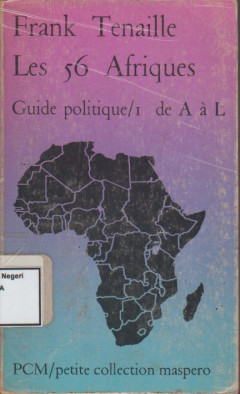
Les 56 Afriques: Guide politique, I. A à L
This book is a comprehensive political guide covering 56 African countries, specifically from A to L. Frank Tenaille's work provides an overview of the political conditions, government history, state structure, key figures, and social and economic dynamics of each country. Published in 1979 by François Maspero in Paris, this book is an essential reference for researchers, journalists, and read…
- Edisi
- -
- ISBN/ISSN
- 2-7071-1124-4
- Deskripsi Fisik
- 225 pages : illustrations ; 18 cm
- Judul Seri
- -
- No. Panggil
- 320.96 TEN l

A Brief history of the future: A Brave and controversial look at the twenty-f…
A Brief History of the Future by Jacques Attali presents an ambitious and provocative analysis of humanity’s likely trajectory throughout the twenty-first century. Drawing from economics, geopolitics, technology, philosophy, and cultural studies, Attali outlines major global transformations—including shifts in political power, economic restructuring, technological breakthroughs, and evolvin…
- Edisi
- -
- ISBN/ISSN
- 978-1-55970-879-1
- Deskripsi Fisik
- xvii, 291 pages ; 21 cm
- Judul Seri
- -
- No. Panggil
- 303.49 LEG a

Cultures of war: Pearl Harbor / Hiroshima / 9-11 / Iraq
Cultures of War explores how nations justify, experience, and remember war through four pivotal events: the attack on Pearl Harbor, the bombing of Hiroshima, the September 11 attacks, and the 2003 invasion of Iraq. John W. Dower examines recurring patterns in U.S. strategic thinking, political rhetoric, and cultural responses to conflict. Through comparative historical analysis, Dower reveals h…
- Edisi
- -
- ISBN/ISSN
- 978-0-393-06150-5
- Deskripsi Fisik
- xxxvii, 396 pages : illustration ; 24,5 cm
- Judul Seri
- -
- No. Panggil
- 355.00973 DOW c
 Karya Umum
  Filsafat
  Agama
Agama  Ilmu-ilmu Sosial
  Bahasa
  Ilmu-ilmu Murni
  Ilmu-ilmu Terapan
  Kesenian, Hiburan, dan Olahraga
  Kesusastraan
  Geografi dan Sejarah