Ditapis dengan

International politics since world war II: A Short history
International Politics Since World War II: A Short History provides a concise yet comprehensive overview of major political developments in the international system following the end of World War II. Charles L. Robertson analyzes the global balance of power, the emergence of the Cold War, decolonization, and the evolution of international institutions. The book highlights key political actors, …
- Edisi
- -
- ISBN/ISSN
- 0-471-72744-X
- Deskripsi Fisik
- xiii, 465 pages ; 22,5 cm
- Judul Seri
- -
- No. Panggil
- 327.0904 CHA i
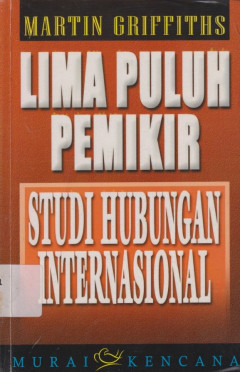
Lima puluh pemikir studi hubungan internasional
Buku ini menghadirkan uraian ringkas namun komprehensif mengenai lima puluh pemikir utama dalam studi hubungan internasional. Melalui penjelasan konsep, kontribusi teoretis, dan pengaruh masing-masing tokoh, Martin Griffiths memberikan gambaran menyeluruh tentang perkembangan disiplin hubungan internasional dari berbagai aliran pemikiran. Buku ini menjadi referensi penting bagi mahasiswa, penel…
- Edisi
- -
- ISBN/ISSN
- 979-421-709-3
- Deskripsi Fisik
- xiv, 371 halaman ; 23 cm
- Judul Seri
- -
- No. Panggil
- 327.11 GRI l
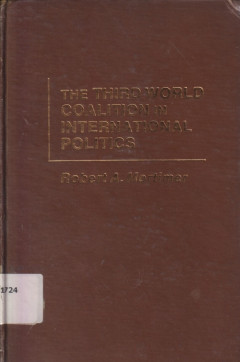
The Third world coalition in international politics
This book examines the emergence, development, and political significance of the Third World coalition in global politics. Robert A. Mortimer analyzes the shared interests and ideological foundations that shaped cooperation among developing nations, particularly within the framework of the Non-Aligned Movement. The study explores how Third World states sought greater influence in international …
- Edisi
- -
- ISBN/ISSN
- 0-03-055286-9
- Deskripsi Fisik
- xi, 147 pages ; 24 cm
- Judul Seri
- -
- No. Panggil
- 327.091724 MOR t
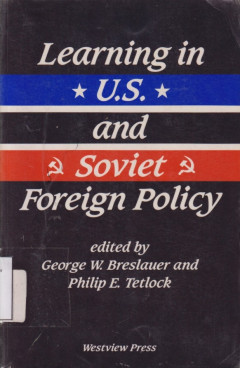
Learning in U.S. and Soviet foreign policy
This volume examines how political leaders and institutions in the United States and the Soviet Union learn from past experiences in shaping their foreign policy decisions. Through comparative case studies, the contributors analyze the cognitive, organizational, and political factors that influence learning in both superpowers during the Cold War era. The book explores how successes and failure…
- Edisi
- -
- ISBN/ISSN
- 0-8133-8264-5
- Deskripsi Fisik
- xiv, 881 pages ; 23 cm
- Judul Seri
- -
- No. Panggil
- 327.730 BRE l

The Great crash ahead: Strategies for a world turned upside down
This book presents Harry S. Dent Jr.’s predictions of a looming major economic downturn based on demographic, financial, and market-cycle analysis. Dent argues that structural shifts in consumer spending, aging populations, and excessive debt will trigger a global economic crash and reshape financial markets. The book provides strategic guidance for investors and individuals seeking to naviga…
- Edisi
- -
- ISBN/ISSN
- -
- Deskripsi Fisik
- xvi, 341 pages : illustration ; 23,5 cm
- Judul Seri
- -
- No. Panggil
- 330.973 DEN g

Contemporary research in international relations: A Perspective and a critica…
This book offers a comprehensive analytical review of the evolution of research in international relations. Dina A. Zinnes examines dominant approaches in IR scholarship, evaluating their theoretical foundations, methodological strengths, and empirical limitations. The work provides a critical perspective on the development of quantitative and qualitative research traditions, highlighting chall…
- Edisi
- -
- ISBN/ISSN
- -
- Deskripsi Fisik
- xviii, 477 pages ; 24 cm
- Judul Seri
- -
- No. Panggil
- 327.072 ZIN c
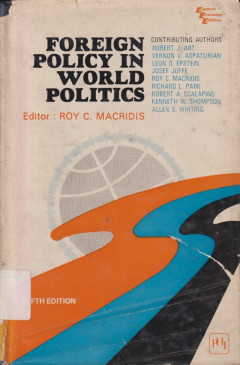
Foreign policy in world politics
This book provides a comprehensive overview of the major issues, actors, and conceptual approaches in the study of foreign policy within the context of world politics. Edited by Roy C. Macridis, the volume offers comparative analyses of national foreign policies, theoretical perspectives on decision-making, and the dynamics of international relations. The fifth edition discusses global politica…
- Edisi
- -
- ISBN/ISSN
- 0-87692-115-2
- Deskripsi Fisik
- 398 pages ; 23,5 cm
- Judul Seri
- -
- No. Panggil
- 327.1 MAC f

The Vast majority: A Journey to the world’s poor
This book offers Michael Harrington’s firsthand account of global poverty, based on his travels through some of the world’s poorest regions. Harrington examines the economic, political, and social forces that shape underdevelopment, highlighting the impact of global inequality and the failures of international aid. Through vivid descriptions and critical analysis, he challenges readers to c…
- Edisi
- -
- ISBN/ISSN
- 0-671-22529-4
- Deskripsi Fisik
- 281 pages ; 21 cm
- Judul Seri
- -
- No. Panggil
- 330.917 HAR v
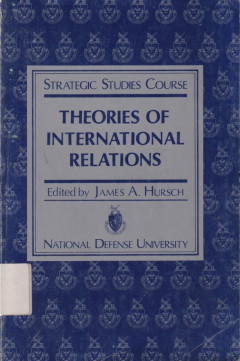
Theories of international relations
This volume, produced for the National Defense University Strategic Studies Course, presents a comprehensive survey of major theoretical perspectives in international relations. Edited by James A. Hursch, the book compiles conceptual frameworks, analytical tools, and scholarly debates essential for understanding global politics and security dynamics. Designed as instructional material for U.S. …
- Edisi
- -
- ISBN/ISSN
- -
- Deskripsi Fisik
- xiv, 316 pages : illustration ; 23 cm
- Judul Seri
- -
- No. Panggil
- 327.101 HUR t

Building a peace economy: Opportunities and problems of post–cold war defen…
This book analyzes the economic and policy implications of reducing military spending in the aftermath of the Cold War. Lall and Marlin, along with contributing researchers, examine the challenges and opportunities created by defense budget cuts, focusing on economic conversion, labor impacts, industrial restructuring, and national budget priorities. The authors explore how shifting resources f…
- Edisi
- -
- ISBN/ISSN
- 0-8133-8433-8
- Deskripsi Fisik
- x, 294 pages ; 23,5 cm
- Judul Seri
- -
- No. Panggil
- 355.62 LAL b
 Karya Umum
  Filsafat
  Agama
Agama  Ilmu-ilmu Sosial
  Bahasa
  Ilmu-ilmu Murni
  Ilmu-ilmu Terapan
  Kesenian, Hiburan, dan Olahraga
  Kesusastraan
  Geografi dan Sejarah