Ditapis dengan
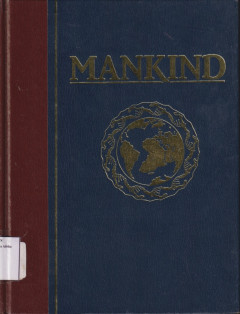
The Illustrated encyclopedia of mankind: Volume 7
The Illustrated Encyclopedia of Mankind, Volume 7, continues the extensive and authoritative coverage of human cultures, societies, and anthropological knowledge presented throughout the series. Edited by Richard Carlisle and Yvonne Deutch, this volume contains comprehensive articles, illustrations, and reference materials exploring ethnology, cultural history, social systems, and the diversity…
- Edisi
- -
- ISBN/ISSN
- 0-86307-238-0
- Deskripsi Fisik
- 926 pages : illustration ; 28 cm
- Judul Seri
- -
- No. Panggil
- 305.8003 CAR i
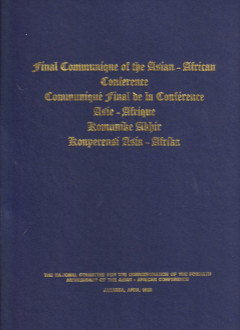
Final communiqué of the Asian-African conference
This volume contains the full text of the Final Communiqué of the 1955 Asian-African Conference, presented in multiple languages and published in April 1985 to commemorate the thirtieth anniversary of the Bandung Conference. The communiqué outlines the principles, resolutions, and collective commitments adopted by the participating nations, including solidarity among developing countries, ant…
- Edisi
- -
- ISBN/ISSN
- -
- Deskripsi Fisik
- 6 pages ; 30 cm
- Judul Seri
- -
- No. Panggil
- 327.172 NAT f
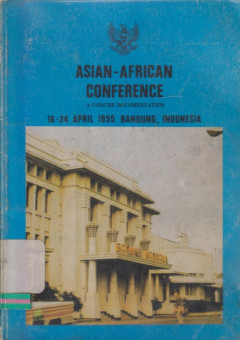
Asian-African Conference: A Concise Documentation
This concise documentation provides an overview of the historic Asian-African Conference held in Bandung, Indonesia, on 18–24 April 1955. Published by the Department of Information of the Republic of Indonesia, the book summarizes key events, participating countries, resolutions, speeches, and the political context that shaped the conference. It highlights the emergence of Asian-African solid…
- Edisi
- -
- ISBN/ISSN
- -
- Deskripsi Fisik
- 86 pages : illustrations ; 21 cm
- Judul Seri
- -
- No. Panggil
- 327.095 TIM a
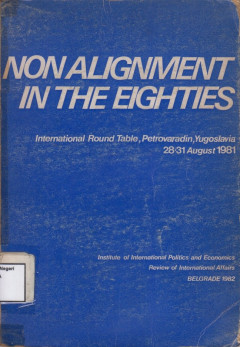
Non alignment in the eighties
This volume presents the proceedings of the International Round Table held in Petrovaradin, Yugoslavia, from 28 to 31 August 1981. It contains analyses and discussions by scholars and policymakers on the role, challenges, and evolution of the Non-Aligned Movement entering the 1980s. The book explores political, economic, and diplomatic dynamics of the NAM countries during the Cold War period, e…
- Edisi
- -
- ISBN/ISSN
- -
- Deskripsi Fisik
- 441 pages ; 24 cm
- Judul Seri
- -
- No. Panggil
- 327.1 POP n

Laporan ketua panitia penyelenggara konperensi menteri-menteri penerangan neg…
Buku ini merupakan laporan resmi Ketua Panitia Penyelenggara Konperensi Menteri-Menteri Penerangan Negara-Negara Non Blok yang diselenggarakan di Jakarta pada tanggal 26–30 Januari 1984. Laporan ini memuat rangkuman kegiatan, agenda, pembahasan, serta hasil-hasil konferensi yang dihadiri para menteri penerangan dari negara-negara anggota Gerakan Non-Blok. Dokumen ini memberikan gambaran menge…
- Edisi
- -
- ISBN/ISSN
- -
- Deskripsi Fisik
- 294 halaman; 29 cm
- Judul Seri
- -
- No. Panggil
- 327.17 DEP l

Non-Aligned Movement under India’s chairmanship
Published by the Indian Institute for Non-Aligned Studies, the book Non-Aligned Movement Under India’s Chairmanship examines India’s role during its leadership of the Non-Aligned Movement (NAM). First published in November 1986, the book provides an overview of India’s diplomatic activities, work programs, and political positions in guiding the movement’s direction in the mid-1980s. It …
- Edisi
- -
- ISBN/ISSN
- -
- Deskripsi Fisik
- 47 pages; 22 cm
- Judul Seri
- -
- No. Panggil
- 327.172 IND n

Inaugural address and responses: Fifth conference of heads of state or govern…
This official conference volume contains the inaugural address and formal responses delivered at the Fifth Conference of Heads of State or Government of Non-Aligned Countries held in Colombo, Sri Lanka, on 16–19 August 1976. The document presents key political statements, declarations, and diplomatic positions of member states regarding international cooperation, peace, decolonization, global…
- Edisi
- -
- ISBN/ISSN
- -
- Deskripsi Fisik
- 509 page ; 24 cm
- Judul Seri
- -
- No. Panggil
- 327.17 FIF i
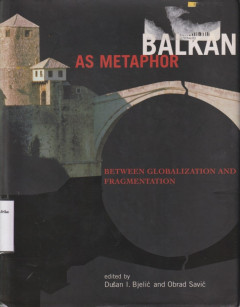
Balkan as metaphor
Balkan as Metaphor is an edited volume led by Dušan I. Bjelić that examines how the Balkans have been represented, imagined, and politically constructed in global discourse. The book explores the region’s shifting identities, ethnic relations, and political transformations following the end of the Cold War. Through interdisciplinary perspectives, the contributors analyze the Balkans as both…
- Edisi
- -
- ISBN/ISSN
- 0-262-02524-8
- Deskripsi Fisik
- xii, 382 pages ; 23,5 cm
- Judul Seri
- -
- No. Panggil
- 305.8 BJE b
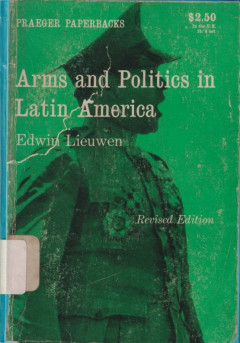
Arms and politics inLatin America
Arms and Politics in Latin America examines the historical and political role of military institutions across Latin American countries. Edwin Lieuwen analyzes how armed forces have shaped national development, political power, policy decisions, and patterns of governance throughout the region. The book discusses the roots of military influence, its expansion during periods of instability, and i…
- Edisi
- -
- ISBN/ISSN
- -
- Deskripsi Fisik
- xvi, 335 pages ; 20 cm
- Judul Seri
- -
- No. Panggil
- 327.8 LIE a

Chile; Política exterior para la democracia
This book is a collection of essays edited by Heraldo Muñoz and examines the new direction of Chilean foreign policy during the transition to democracy in the late 1980s. The authors, prominent academics, diplomats, and political analysts, evaluate Chile's global position, the diplomatic challenges of the post-Pinochet era, and the need to construct a foreign policy that supports democracy, ec…
- Edisi
- -
- ISBN/ISSN
- 956-16-0183-8
- Deskripsi Fisik
- 262 pages ; 21 cm
- Judul Seri
- -
- No. Panggil
- 327.83 MUN c
 Karya Umum
  Filsafat
  Agama
Agama  Ilmu-ilmu Sosial
  Bahasa
  Ilmu-ilmu Murni
  Ilmu-ilmu Terapan
  Kesenian, Hiburan, dan Olahraga
  Kesusastraan
  Geografi dan Sejarah