Ditapis dengan
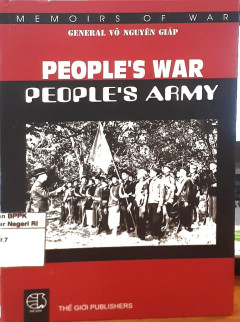
People's war people's army
Even to this day, bourgeois strategists have not yet overcome their surprise at the outcome of the war in Indochina. How could the Vietnamese nation have defeated an imperialist power such as France which was backed by the United States? They try to explain this extraordinary fact by the correctness of strategy and tactics, by the forms of combat and the heroism of the Vietnam People’s Army. …
- Edisi
- -
- ISBN/ISSN
- -
- Deskripsi Fisik
- 202 pages : illustrations (black and white) ; 21 cm
- Judul Seri
- -
- No. Panggil
- 355.959 Gia p
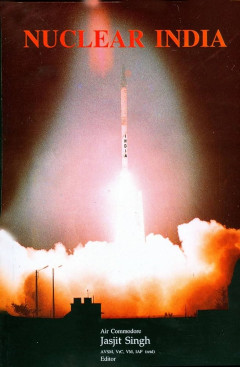
Nuclear India
India s nuclear tests on May 11 & 13,1998 ended the country s three decade old, self-imposed restraint on its emergence as a nuclear power. India announced that it was now a nuclear weapon state. A new phase in India s security calculus, therefore, has begun. This volume attempts to explore and explain the whole range of issues related to Nuclearisation, in order to extrapolate logical policy p…
- Edisi
- -
- ISBN/ISSN
- 81-86019-11-1
- Deskripsi Fisik
- 324 pages ; 24 cm
- Judul Seri
- -
- No. Panggil
- 355.8251 Sin n
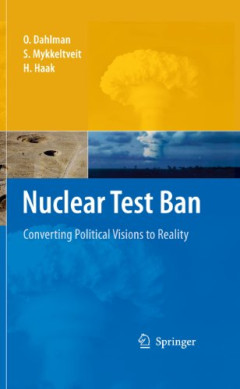
Nuclear test ban: converting political visions to reality
Nuclear tests have caused public concern ever since the first such test was conducted, more than six decades ago. During the Cold War, however, con- tions were not conducive to discussing a complete ban on nuclear testing. It was not until 1993 that negotiations on such a treaty finally got under way. From then on, things moved relatively quickly: in 1996, the United Nations General Assembly ad…
- Edisi
- -
- ISBN/ISSN
- 978-1-4020-6883-6
- Deskripsi Fisik
- xviii, 277 pages : illustrations ; 24 cm
- Judul Seri
- -
- No. Panggil
- 355.825 Dah n
Constitution of the Republic of Ghana
the Provisional National Defence Council (Establishment) Proclamation 1981, this Law is hereby made: 1. The Constitution approved at the Referendum held on 28th April, 1992 and set out in the Schedule to this Law shall come into force on the 7th day of January, 1993. COMMENCE- MENT OF THE CONSTITUTION, 2. Whenever it becomes necessary for the Constitution to be printed the Government Prin…
- Edisi
- -
- ISBN/ISSN
- -
- Deskripsi Fisik
- xxvi, 210 pages ; 23 cm
- Judul Seri
- -
- No. Panggil
- 342.667 Gha c
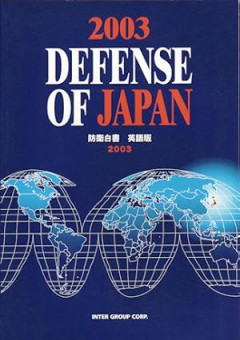
2003 Defense of Japan
The three years from to 2003 undoubtedly constitute a turning point that will be seen as marking a change in the course of world history by future generations
- Edisi
- -
- ISBN/ISSN
- 90107-10-X
- Deskripsi Fisik
- xi, 538 pages : illustrations (black and white) ; 25 cm
- Judul Seri
- -
- No. Panggil
- 355.52 Ish d

The reagan wars: A Constitutional perspective on war powers and the presidency
Ronald Reagan's term in office was punctuated by four significant employments of military force: the deployment of Marines to Lebanon; the intervention in Grenada; the air strikes against Libya; and the deployment of naval forces to the Persian Gulf. In the aftermath of each of these military operations, critics ques- tioned the constitutional basis for such unilat- eral presidential war-making…
- Edisi
- -
- ISBN/ISSN
- 0813311985
- Deskripsi Fisik
- xi, 279 pages : illustrations (black and white) ; 23 cm
- Judul Seri
- -
- No. Panggil
- 342.730412 Hal r
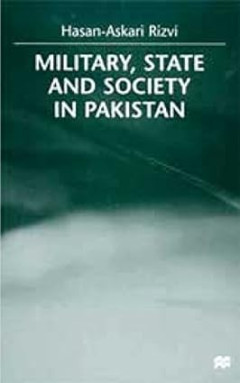
Military, state and society in pakistan
This book offers a comprehensive study of the dynamics of civil-military relations in Pakistan. It asks how and why the Pakistan military has acquired such a salience in the polity and how it continues to influence decision-making on foreign and security policies and key domestic political, social and economic issues. It also examines the changes within the military, the impact of these changes…
- Edisi
- -
- ISBN/ISSN
- 0-312-23193-8
- Deskripsi Fisik
- xix, 307 pages ; 23 cm
- Judul Seri
- -
- No. Panggil
- 355.549 1 Riz m
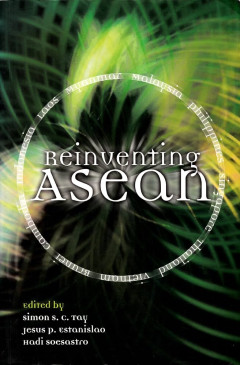
Reinventing ASEAN
Bringing together contributions by some of the leading experts on ASEAN, this work focuses primarily on the political-security and economic dimensions of ASEAN co-operation. Other areas for ASEAN co-operation, such as financial matters and environmental protection are also considered.
- Edisi
- -
- ISBN/ISSN
- 981-230-147-X
- Deskripsi Fisik
- xiv, 316 pages ; 23 cm
- Judul Seri
- -
- No. Panggil
- 352.1159 Tay r
All the laws but one: civil liberties in wartime
The Chief Justice of the United States here probes the diverse fates of America's freedoms in times of war-and in the face of repressive acts by our own government: How the Lincoln administration's decision, in the Civil War, to suspend the writ of habeas corpus and to allow trials of civilians before military tri- bunals was opposed by judges who daring to stand against Congress, the President…
- Edisi
- -
- ISBN/ISSN
- 0-679-44661-3
- Deskripsi Fisik
- xiii, 234 pages ; 24 cm
- Judul Seri
- -
- No. Panggil
- 342.73085 Reh a
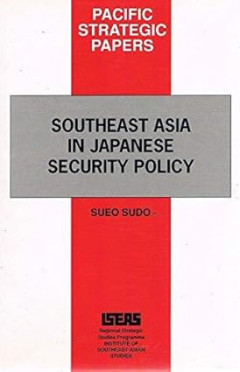
Southeast Asia in Japanese Security Policy
Tracing the historical development of Japan-Southeast Asia relations, this study explains the ASEAN factor in Japanese security policy. While actual security ties between Japan and ASEAN are quite rudimentary, the significance of the latters stability and prosperity in Japanese security policy has been growing in recent years. The paper concludes that, as Japans political role in the region bec…
- Edisi
- -
- ISBN/ISSN
- 981-3035-79-X
- Deskripsi Fisik
- 81 pages ; 25 cm
- Judul Seri
- -
- No. Panggil
- 355.940 959 Sud s
 Karya Umum
  Filsafat
  Agama
Agama  Ilmu-ilmu Sosial
  Bahasa
  Ilmu-ilmu Murni
  Ilmu-ilmu Terapan
  Kesenian, Hiburan, dan Olahraga
  Kesusastraan
  Geografi dan Sejarah