Ditapis dengan
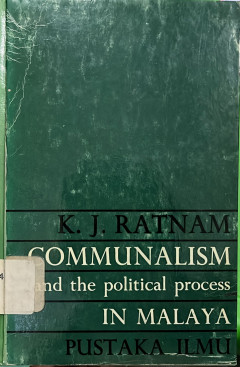
Communialism and the political process in Malaya
In this book, the author deals with the communal problem as it has existed in the Federation of Malaya since the Second World War, when the non-Malay population ceased to be transient and became a part of the settled community. Dr Ratnam has selected for discussion those topics and issues which form the basis of communal disagreement-the creation of Malayan citizenship, the introduction of ele…
- Edisi
- -
- ISBN/ISSN
- -
- Deskripsi Fisik
- viii, 248 pages ; 22 cm
- Judul Seri
- -
- No. Panggil
- 324.204 RAT c
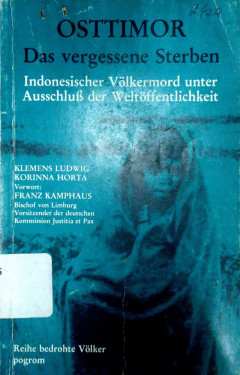
Osttimor - Das vergessene sterben
Osttimor – Das vergessene Sterben offers a powerful and unsettling account of the widespread violence and humanitarian catastrophe that unfolded in East Timor during Indonesia’s occupation. Klemens Ludwig and Korinna Horta draw upon eyewitness testimonies, human rights reports, and journalistic investigations to expose the systematic repression, forced displacement, and mass killings that w…
- Edisi
- -
- ISBN/ISSN
- 3-922197-16-7
- Deskripsi Fisik
- 149 pages : ilustrations ; 19 cm
- Judul Seri
- -
- No. Panggil
- 341.5 LUD o
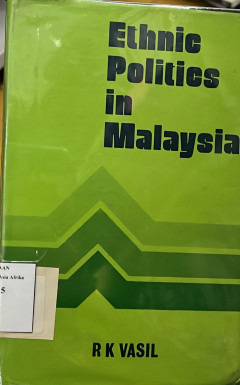
Ethnic politics in Malaysia
The book Ethnic Politics in Malaysia by R. K. Vasil examines the dynamics of communal and ethnic politics in post-independence Malaysia. Vasil explores how various ethnic groups (mainly Malay, Chinese, and Indian) interact within a pluralistic political system. He discusses power structures, the role of ethnic-based political parties, and the ways in which political elites build communal coalit…
- Edisi
- -
- ISBN/ISSN
- -
- Deskripsi Fisik
- xii, 234 pages ; 25 cm
- Judul Seri
- -
- No. Panggil
- 320.959 5 VAS e
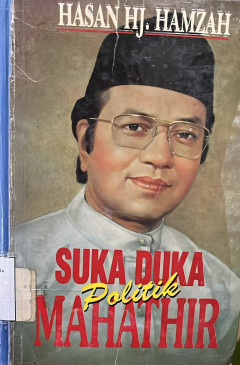
Suka duka politik Mahathir
This book highlights the political career of Dr. Mahathir Mohamad during his decade as Prime Minister of Malaysia, revealing the ups and downs he experienced as the country's leader. Hassan Hj. Hamzah describes Mahathir as a controversial figure: some see him as a dictator, but many also respect him as a hero of modernization. In this narrative, Hamzah examines the various political challenges,…
- Edisi
- -
- ISBN/ISSN
- 983-9683-05-5
- Deskripsi Fisik
- xv, 496 pages : ilustrations ; 25 cm
- Judul Seri
- -
- No. Panggil
- 320.959 5 HAM s
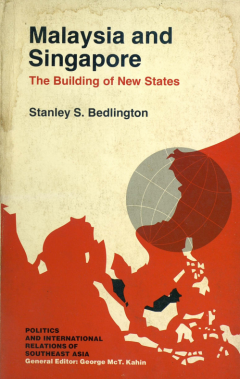
Malaysia and Singapore : The Building of New States
This concise and informed introduction to the way the Malaysian and Singapore governments work is based on the author’s unusual combination of academic training and professional field experience. Stanley Bedlington goes beyond a mere description of government institutions and political parties. He moves easily across various disciplines, including history, anthropology, sociology, and politic…
- Edisi
- -
- ISBN/ISSN
- 0-8014-0910-1
- Deskripsi Fisik
- 285 pages ; 25 cm
- Judul Seri
- -
- No. Panggil
- 320.959 5 BED m
Malaysian politics, 1968-1970 : Crisis and response part 2
This book analyzes the Malaysian political crisis between 1968 and 1970, particularly the riots of May 13, 1969. It highlights the communal tensions between Malays, Chinese, and Indians, as well as the impact of the 1969 elections on national stability. It also discusses the government's response, including the formation of the National Movement Council, and how the political elite maintained c…
- Edisi
- -
- ISBN/ISSN
- -
- Deskripsi Fisik
- 769 pages ; 20 cm
- Judul Seri
- -
- No. Panggil
- 320.959 5 BAS m
Malaysian politics, 1968-1970 : Crisis and response part 1
In this book, Jerome R. Bass investigates the political crisis in Malaysia between 1968 and 1970, a period marked by ethnic strife, communal tensions, and the collapse of traditional support for the ruling coalition. Bass examines the dynamics of the 1969 general election, the May 13 riots, and the institutional responses taken by Malaysia's political elite that subsequently reshaped the nation…
- Edisi
- -
- ISBN/ISSN
- -
- Deskripsi Fisik
- xv, 378 pages ; 20 cm
- Judul Seri
- -
- No. Panggil
- 320.959 5 BAS m

Democracy without consensus : Communism and political stability in Malaysia
Since World War II the democratic systems adopted by states emerging from colonial rule have in some cases been abandoned and in others suspended or transformed. Two questions arise: Can democracy succeed in newly independent states dominated by communal cleavages? If so, what adjustments are necessary in Western models of democracy? Karl von Vorys contributes new answers by examining the polit…
- Edisi
- -
- ISBN/ISSN
- -
- Deskripsi Fisik
- xiii, 443 pages : 20 cm
- Judul Seri
- -
- No. Panggil
- 320.532 595 VOR d

The cultural background of the peoples of Malaya
This book presents an anthropological and sociological analysis of cultural diversity in the Malay Peninsula. N. J. Ryan reviews the social and cultural background of the main ethnic groups, namely the Malay, Chinese, and Indian, as well as Western influences, in the development of Malay society. Through a historical approach, he explores the social structures, customs, traditional values, beli…
- Edisi
- -
- ISBN/ISSN
- -
- Deskripsi Fisik
- xiii, 184 pages: illustrations ; 19 cm
- Judul Seri
- -
- No. Panggil
- 306.595 RYA c

Empty fullness: Materiality and spirituality in contemporary Korean art
This book, published in conjunction with the 2014 touring exhibition, explores the profound interplay between materiality and spirituality in contemporary Korean art. Chung Joon‑Mo reframes the Korean monochrome (or “monotone”) tradition often labeled Dansaekhwa not simply as minimalist formalism, but as a deeply spiritual process rooted in repetition, restraint, and transformation. Artis…
- Edisi
- -
- ISBN/ISSN
- 978-89-98604-07-3
- Deskripsi Fisik
- 118 pages : illustrations ; 28 cm
- Judul Seri
- -
- No. Panggil
- 306.45195 JOO e
 Karya Umum
  Filsafat
  Agama
Agama  Ilmu-ilmu Sosial
  Bahasa
  Ilmu-ilmu Murni
  Ilmu-ilmu Terapan
  Kesenian, Hiburan, dan Olahraga
  Kesusastraan
  Geografi dan Sejarah