Ditapis dengan
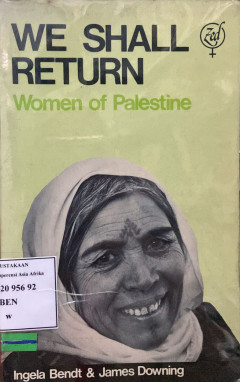
We shall return: Women of Palestine
The authors, swedish journalists spent five months in lebanon interviewing palestinian women in refugee camps during 1978-1979. besidestheir own personal impressions, they include description, quotes from their interviews which is full political passion. going through the accounta we get a feel of the oppression and resistence of stateless palestinians and the exploding civil war in lebanon. we…
- Edisi
- -
- ISBN/ISSN
- 0-8820-154-3
- Deskripsi Fisik
- iii, 129 pages: illustration; 22 cm
- Judul Seri
- -
- No. Panggil
- 305.420 BEN w

Iraq: The Eternal fire 1972 Iraqi oil nationalizaation in perspective
Iraq: The Eternal Fire – 1972 Iraqi Oil Nationalization in Perspective examines one of the most significant turning points in Iraq’s modern economic and political history: the nationalization of its oil industry in 1972. The book analyzes the circumstances that led to the decision, including international pressures, domestic political shifts, and Iraq’s growing assertion of sovereignty ov…
- Edisi
- 11
- ISBN/ISSN
- 0 86199 004 8
- Deskripsi Fisik
- 255 pages; 22,5 cm
- Judul Seri
- -
- No. Panggil
- 338.2 HUS i

Japanese politics--an Inside view: Readings from Japan
Presents a collection of essays and analyses written by Japanese scholars that provide an insider’s perspective on Japan’s political system. The book explores key aspects of political institutions, party dynamics, bureaucratic influence, local governance, and policy-making processes. By highlighting viewpoints rooted in Japan’s own academic and political discourse, the volume offers reade…
- Edisi
- -
- ISBN/ISSN
- 0-8014-0735-4
- Deskripsi Fisik
- x, 248 pages : illustrations ; 21,5 cm
- Judul Seri
- -
- No. Panggil
- 320.95204 ITO j
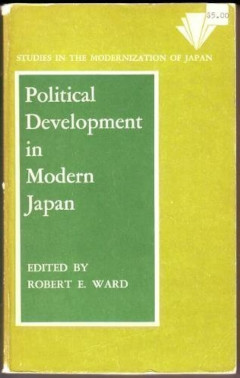
Political development in modern Japan
A comprehensive analysis of Japan’s political transformation from the late Tokugawa period to the post–World War II era. Ward examines the major forces—social, institutional, intellectual, and international—that shaped Japan’s transition from a feudal order to a modern nation-state. The book highlights key developments such as the Meiji Restoration, constitutional formation, party pol…
- Edisi
- -
- ISBN/ISSN
- 0-691-00017-4
- Deskripsi Fisik
- xii, 637 pages ; 20 cm
- Judul Seri
- -
- No. Panggil
- 320.952 WAR p

Thought and behaviour in modern Japanese politics
A seminal study that analyzes the intellectual foundations, patterns of thought, and political behavior that shaped modern Japanese politics. Maruyama examines how the legacy of feudalism, traditional power structures, and hierarchical norms influenced Japan’s political development before and after World War II. The book explores the relationship between ideology, political institutions, and …
- Edisi
- -
- ISBN/ISSN
- 0-19-580453-8
- Deskripsi Fisik
- ix, 407 pages ; 20 cm
- Judul Seri
- -
- No. Panggil
- 320.952 MAR t
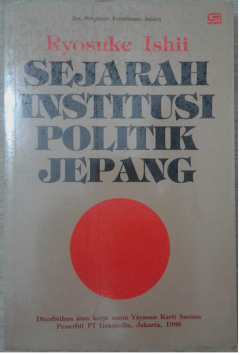
Sejarah institusi politik Jepang
Kajian menyeluruh tentang perkembangan lembaga-lembaga politik Jepang dari masa awal hingga periode modern. Buku ini membahas perubahan struktur pemerintahan, sistem kekuasaan, hubungan antara istana kekaisaran, samurai, dan shogunat, serta pembentukan institusi modern pada era Meiji. Ishii menjelaskan bagaimana tradisi politik, budaya hukum, dan perubahan sosial membentuk karakter sistem polit…
- Edisi
- -
- ISBN/ISSN
- 979-403-459-2
- Deskripsi Fisik
- xviii, 244 halaman ; 21 cm
- Judul Seri
- -
- No. Panggil
- 320.952 ISH s

Japan: The Intellectual foundations of modern Japanese politics
Explores the major ideas and intellectual traditions that shaped Japan’s political development from the late Tokugawa era to modern times. The book highlights how thinkers and reformers debated issues such as modernization, authority, democracy, and national identity. Najita shows how these evolving ideas influenced the formation of Japan’s political institutions and guided the country’s …
- Edisi
- -
- ISBN/ISSN
- 0-226-56803-2
- Deskripsi Fisik
- viii, 152 pages ; 20 cm
- Judul Seri
- -
- No. Panggil
- 320.52 NAJ j

The Japan of today
An overview of Japan’s contemporary political, economic, and social landscape, highlighting the forces that have shaped the nation’s modern identity. The book examines postwar developments, governmental structure, industrial growth, technological innovation, demographic change, and cultural trends. It explores the balance between tradition and modernization, the role of education and work c…
- Edisi
- -
- ISBN/ISSN
- -
- Deskripsi Fisik
- 157 pages : illustrations ; 22,5 cm
- Judul Seri
- -
- No. Panggil
- 306.52 INT j

Senghor et le monde : La politique internationale du Senegal
Senghor is today the most famous African in the world. He made Senegal a country whose diplomatic and cultural activity is present in all four corners of the globe. The author, Nicolas Martin, was particularly well placed to tackle such a subject: a former Technical Advisor to the Senegalese Ministry of Culture, he now teaches international relations at the Sorbonne. He met with the Senegales…
- Edisi
- -
- ISBN/ISSN
- 2-85809-108-00
- Deskripsi Fisik
- 176 pages ; 22 cm
- Judul Seri
- -
- No. Panggil
- 327.1763 MAR s

Japanese culture A Study of origins and characteristics
Explores the historical roots and key characteristics of Japanese cultural identity. Through an anthropological perspective, Ishida examines how geography, early social structures, religious traditions, and external influences shaped Japan’s values, rituals, and patterns of thought. The book offers a concise overview of the main cultural factors that have defined Japan’s development over time.
- Edisi
- -
- ISBN/ISSN
- -
- Deskripsi Fisik
- ix, 156 pages ; 23,5 cm
- Judul Seri
- -
- No. Panggil
- 306.152 ISH j
 Karya Umum
  Filsafat
  Agama
Agama  Ilmu-ilmu Sosial
  Bahasa
  Ilmu-ilmu Murni
  Ilmu-ilmu Terapan
  Kesenian, Hiburan, dan Olahraga
  Kesusastraan
  Geografi dan Sejarah