Ditapis dengan

The Realities behind diplomacy: Background influences on British external pol…
This book examines the fundamental factors that influenced British foreign policy from the mid-19th century to 1980. Paul Kennedy examines the various aspects—economic strength, geographic location, social structure, strategic interests, and global power dynamics—that shaped how Britain responded to international change. Using historical approaches and political analysis, the book explains …
- Edisi
- -
- ISBN/ISSN
- -
- Deskripsi Fisik
- 416 pages ; 19,5 cm
- Judul Seri
- -
- No. Panggil
- 327.41009 KEN r

Holland
This photo book showcases the landscapes, culture, and daily life of the Netherlands through the work of leading photographers. With an introduction by Paul van Vliet, the book offers a visual portrait of the landscape, cities, architecture, and unique Dutch people. With its high-quality imagery, this book provides a comprehensive overview of Holland as a cultural and tourist destination. It is…
- Edisi
- -
- ISBN/ISSN
- 90-70900-02-9
- Deskripsi Fisik
- 108 pages : illustration ; 23,5 cm
- Judul Seri
- -
- No. Panggil
- 914.92 VLI h

The Unexpected revolution: Social forces in the Hungarian uprising
Paul Kecskemeti's The Unexpected Revolution is a thorough analysis of the Hungarian Revolution of 1956. It highlights the social forces that drove the uprising, including the roles of students, workers, political elites, and the internal dynamics of the Communist Party. Kecskemeti explores the economic, political, and psychological factors that fueled the rapid changes in Hungary and examines h…
- Edisi
- -
- ISBN/ISSN
- -
- Deskripsi Fisik
- vi, 178 pages ; 22 cm
- Judul Seri
- -
- No. Panggil
- 947.19 KEC u
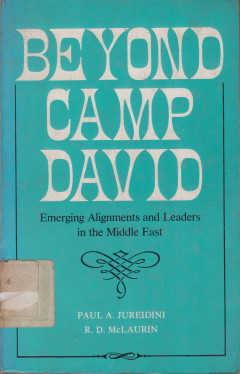
Beyond camp David
“Beyond Camp David” examines the political dynamics of the Near East following the historic Camp David accords. Paul A. Jureidini and Ronald D. McLaurin analyze the shifting regional alliances, the limitations of U.S. diplomacy, and the evolving political structures in the Middle East after 1945. The book provides an in-depth assessment of geopolitical challenges, strategic interests, and t…
- Edisi
- -
- ISBN/ISSN
- 0-8156-2235-X
- Deskripsi Fisik
- xxii, 197 pages : illustrations ; 21,5 cm
- Judul Seri
- -
- No. Panggil
- 327.0956 JUR b

Oriental ceramics: The World’s great collections, vol. 7 – Musée Guimet,…
This volume is part of The World’s Great Collections: Oriental Ceramics series and presents a detailed catalog of the Asian pottery and porcelain collection housed in the Musée Guimet, Paris. The book features high-quality photographic plates, scholarly introductions, and expert annotations describing the historical, cultural, and artistic significance of each ceramic object. Contributions f…
- Edisi
- -
- ISBN/ISSN
- 0-87011-446-8
- Deskripsi Fisik
- 175 pages : illustrations ; 32 cm
- Judul Seri
- -
- No. Panggil
- 738.095 PAU o

International relations: A Brief insight
This concise volume provides a clear and engaging introduction to the essential themes, actors, and dynamics of international relations. Paul Wilkinson outlines the evolution of the international system, major theories of global politics, the role of states and non-state actors, diplomacy, war, peacekeeping, international organizations, and contemporary global challenges. Designed as an accessi…
- Edisi
- -
- ISBN/ISSN
- 978-1-4027-6879-8
- Deskripsi Fisik
- 182 pages : illustration ; 19 cm
- Judul Seri
- -
- No. Panggil
- 327 WIL i

First things first: Meeting basic human needs in the developing countries
First Things First examines the concept of “basic human needs” as a central priority in development policy for low-income countries. Written by Paul Streeten with contributions from several development economists, the book evaluates how governments and international institutions can address poverty through targeted investments in nutrition, health, education, and employment. It presents ana…
- Edisi
- -
- ISBN/ISSN
- 0-19-520368-2
- Deskripsi Fisik
- xii, 206 pages ; 23 cm
- Judul Seri
- -
- No. Panggil
- 338.9 STR f
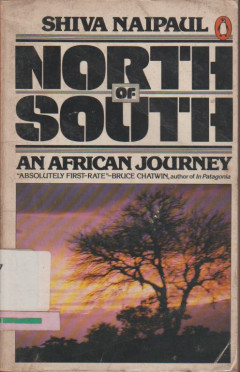
North of south: An African journey
North of South: An African Journey is a vivid travel narrative by Shiva Naipaul that chronicles his explorations across Kenya, Tanzania, and Zambia during the late 1970s. Through sharp, reflective, and often provocative observations, Naipaul examines the complex ethnic, political, and cultural landscapes of post-independence East Africa. The book captures the region’s tensions between tradit…
- Edisi
- -
- ISBN/ISSN
- 0-14-00.4894-4
- Deskripsi Fisik
- 349 pages : illustration ; 19,5 cm
- Judul Seri
- -
- No. Panggil
- 916.7 NAI n

The Lusitania disaster : An Episode in modern warfare and diplomacy
The Lusitania Disaster examines the dramatic sinking of the British ocean liner RMS Lusitania by a German U-boat in 1915 and its far-reaching effects on international diplomacy and modern warfare. Thomas A. Bailey and Paul B. Ryan analyze political, military, and intelligence factors surrounding the tragedy, revealing how the incident influenced U.S.–German relations and contributed to shifti…
- Edisi
- -
- ISBN/ISSN
- 0-02-901240-6
- Deskripsi Fisik
- xv, 383 pages : illustration ; 24 cm
- Judul Seri
- -
- No. Panggil
- 940.451 BAI l
Africa & Africans
This book provides a comprehensive introduction to African society and culture, covering social history, family structure, traditional economics, religion, and the dynamics of social change. Written by two leading anthropologists, this revised edition updates the field data and interpretations to reflect developments in African research through the early 1970s. This book is an essential referen…
- Edisi
- cet.2
- ISBN/ISSN
- 0-385-08231-2
- Deskripsi Fisik
- 391 pages; 18 cm
- Judul Seri
- -
- No. Panggil
- 960 BOH a
 Karya Umum
  Filsafat
  Agama
Agama  Ilmu-ilmu Sosial
  Bahasa
  Ilmu-ilmu Murni
  Ilmu-ilmu Terapan
  Kesenian, Hiburan, dan Olahraga
  Kesusastraan
  Geografi dan Sejarah