Ditapis dengan

A Palestinian state: The Implications for Israel
The future of the West Bank and Gaza remains the single most crucial issue in the search for peace in the Middle East. Examining the entire range of possible outcomes, Mark Heller argues that an independent Palestinian state in those territories, even one dominated by the PLO, could, under certain stringent conditions, be the preferred option for Israel. In the first comprehensive treatment of…
- Edisi
- -
- ISBN/ISSN
- 0-674-65221-5
- Deskripsi Fisik
- x, 190 pages: illustration; 24 cm
- Judul Seri
- -
- No. Panggil
- 956.04 HEL p
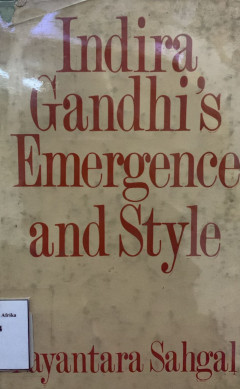
Indira Gandhi's emergence and style
Indira Gandhi’s Emergence and Style by Nayantara Sahgal offers a psychological and political portrait of Indira Gandhi, focusing on her personality, leadership style, and how she rose to power. Sahgal dissects the interplay between Indira’s familial inheritance (as Nehru’s daughter) and her own temperament, arguing that her political behavior and decision-making were deeply shaped by her …
- Edisi
- -
- ISBN/ISSN
- 0-7069-0624-1
- Deskripsi Fisik
- ix, 215 pages ; 21 cm
- Judul Seri
- -
- No. Panggil
- 923.254 SAH i
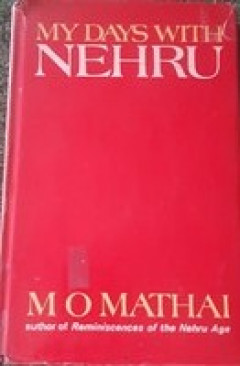
My days with Nehru
My Days with Nehru by M. O. Mathai is a memoir recounting Mathai’s personal and working relationship with Jawaharlal Nehru, India’s first Prime Minister. Mathai, who served as Nehru’s private secretary, provides a revealing portrait of Nehru’s personality, work habits, political vision, and private life. Through detailed anecdotes, conversations, and reflections, Mathai describes not ju…
- Edisi
- -
- ISBN/ISSN
- 0 7069 0823 6
- Deskripsi Fisik
- xv, 200 pages : illustrations ; 22,5 cm
- Judul Seri
- -
- No. Panggil
- 954.042 MOM m

Down with colonialism!
Down with Colonialism! is a collection of speeches, essays, and political writings by Ho Chi Minh that outlines his critique of French colonial rule in Vietnam and his vision for national liberation. Through clear and persuasive arguments, Ho Chi Minh exposes the injustices, exploitation, and oppression experienced by the Vietnamese people under colonialism. The book highlights the development …
- Edisi
- -
- ISBN/ISSN
- 978-1-84467-177-9
- Deskripsi Fisik
- xliv, 226 pages ; 19,5 cm
- Judul Seri
- -
- No. Panggil
- 808 MIN d
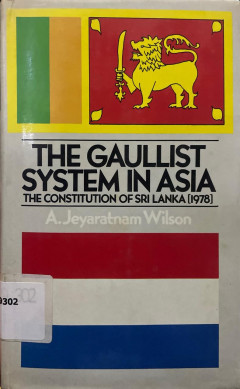
The Gaullist system in Asia: The Constitution of Sri Lanka
This book analyzes the influence of the French Gaullist model on the constitutional and political structure of Sri Lanka. It explores how Sri Lanka adopted elements of a strong executive presidency—similar to the system established by Charles de Gaulle in France—while adapting them to the country’s unique political, social, and historical context. The book examines the development of the …
- Edisi
- -
- ISBN/ISSN
- 0-333-27276-5
- Deskripsi Fisik
- xvii, 157 pages ; 22,5 cm
- Judul Seri
- -
- No. Panggil
- 342.549 WIL g
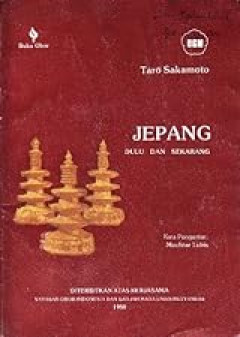
Jepang dulu dan sekarang
Tinjauan ringkas tetapi padat mengenai perjalanan sejarah Jepang, mulai dari era kuno hingga masa modern. Sakamoto membahas bagaimana struktur sosial-politik dan budaya Jepang berubah dari sistem feodal dan keshogunan ke era modern melalui proses modernisasi, kontak dengan Barat, dan transformasi militer serta ekonomi. Dalam buku ini juga dijelaskan dinamika sosial seperti peran samurai, transf…
- Edisi
- -
- ISBN/ISSN
- -
- Deskripsi Fisik
- xxiv, 95 halaman : ilustrasi ; 22 cm
- Judul Seri
- -
- No. Panggil
- 952.031 SAK j

The Singapore story: Memoirs of Lee Kuan Yew
Singapore's former Senior Minister Lee Kuan Yew provides an account of his personal and political life and provides a blow-by-blow chronicle of his dealings with political groups and leaders, both Malaysian and international, on the road to independence. Includes b & w photographs. Annotation c. Book News, Inc., Portland.
- Edisi
- -
- ISBN/ISSN
- 981-204-983-5
- Deskripsi Fisik
- 680 pages : illustrations (black and white) ; 25 cm
- Judul Seri
- -
- No. Panggil
- 923.1 YEW s

Sri Lanka's hybrid presidential and parliamentary system and the separation o…
This book examines Sri Lanka’s unique hybrid presidential–parliamentary system and evaluates its implications for the doctrine of separation of powers. It explores the historical evolution of the system, the constitutional reforms that shaped the balance between executive and legislative institutions, and the practical challenges that arise from overlapping powers. Through an analysis of po…
- Edisi
- 1
- ISBN/ISSN
- -
- Deskripsi Fisik
- xxii, 132 pages ; 21,5 cm
- Judul Seri
- -
- No. Panggil
- 342.5493 ZAF s

East Timor, Indonesia and the world: Myth and realities
The contents of this book: Chapter 1 From Portuguese Timor to Indonesia's East TImor Chapter 2 East Timor's Integration into Indonesia: the External Dynamics Chapter 3 East Timor and the Internal Dimension of Integration
- Edisi
- cet.2
- ISBN/ISSN
- 983-99159-0-8
- Deskripsi Fisik
- xxiv, 428 pages ; 22 cm
- Judul Seri
- -
- No. Panggil
- 959.87 SIN e
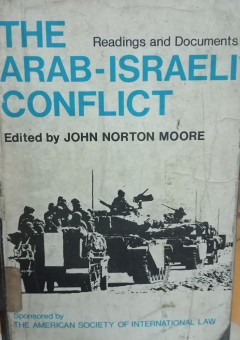
The Arab-Israel conflict
The Arab-Israeli Conflict is a comprehensive compilation of legal, historical, and political writings that examines the multifaceted dispute between Arabs and Israelis. Edited by John Norton Moore, the work brings together key readings and primary documents to illuminate the interplay of international law, territorial claims, refugee issues, and peace efforts. The volume addresses how legal pri…
- Edisi
- -
- ISBN/ISSN
- -
- Deskripsi Fisik
- vi, 1285 pages : illustrations ; 24 cm
- Judul Seri
- -
- No. Panggil
- 956.048 MOO a
 Karya Umum
  Filsafat
  Agama
Agama  Ilmu-ilmu Sosial
  Bahasa
  Ilmu-ilmu Murni
  Ilmu-ilmu Terapan
  Kesenian, Hiburan, dan Olahraga
  Kesusastraan
  Geografi dan Sejarah