Ditapis dengan
The Evolution of diplomatic method
This book, based on the Chichele Lectures delivered by Harold Nicolson at the University of Oxford in 1953, provides a comprehensive historical analysis of the evolution of diplomatic methods. Nicolson explores the transformation of diplomatic practices from the Renaissance to modern times, detailing the various methods employed in diplomacy and their impact on international relations.
- Edisi
- -
- ISBN/ISSN
- -
- Deskripsi Fisik
- 91 pages ; 22 cm
- Judul Seri
- -
- No. Panggil
- 327.2 NIC e
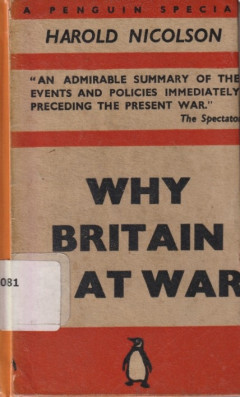
Why Britain is at war
This book contains Harold Nicolson's explanation of why Britain entered World War II, written at the very beginning of the conflict in 1939. Nicolson outlines the political conditions in Europe, the rise of Nazi Germany, the failure of appeasement, and the danger of Hitler's expansion to international security. As a diplomat and member of the British Parliament, Nicolson's views provide a direc…
- Edisi
- -
- ISBN/ISSN
- -
- Deskripsi Fisik
- 160 pages ; 18 cm
- Judul Seri
- -
- No. Panggil
- 941.081 NIC w

The Congress of Vienna: A Study in allied unity, 1812–1822
The Congress of Vienna: A Study in Allied Unity, 1812–1822 by Harold Nicolson offers a detailed examination of the diplomatic negotiations that shaped Europe after the Napoleonic Wars. Nicolson analyzes the personalities, motives, and diplomatic maneuvers of the major powers involved, including Britain, Austria, Prussia, Russia, and France. The book explores how statesmen sought to restore st…
- Edisi
- -
- ISBN/ISSN
- -
- Deskripsi Fisik
- xiii, 312 pages : illustration ; 22 cm
- Judul Seri
- -
- No. Panggil
- 327.11 NIC c
 Karya Umum
  Filsafat
  Agama
Agama  Ilmu-ilmu Sosial
  Bahasa
  Ilmu-ilmu Murni
  Ilmu-ilmu Terapan
  Kesenian, Hiburan, dan Olahraga
  Kesusastraan
  Geografi dan Sejarah