Ditapis dengan

Meeting of Ministers in Preparation for the Second African-Asian Conference: …
This publication documents the Meeting of Ministers held in preparation for the Second African-Asian Conference, conducted in Djakarta from 10 to 15 April 1964. It contains discussions, resolutions, and organizational preparations aimed at strengthening Afro-Asian cooperation in political, economic, and cultural fields. Issued by the Conference Secretariat, the volume reflects the geopolitical …
- Edisi
- -
- ISBN/ISSN
- -
- Deskripsi Fisik
- 186 pages : illustrations ; 23,5 cm
- Judul Seri
- -
- No. Panggil
- 327.17 CON m

Tito and non-alignment: President Tito's addresses at conferences of non-alig…
World stability has been discussed for years now as wholly dependent on a balance of power and fear, and bloc negotiation. At the same time, however, we have been witness to persisting instability, as the end result of precisely these presumptions. There is no particular need to point out that non-aligned policy has been the political force that has imparted positive elements of stability to an…
- Edisi
- -
- ISBN/ISSN
- -
- Deskripsi Fisik
- 119 pages ; 20 cm
- Judul Seri
- -
- No. Panggil
- 327.17 TIT t
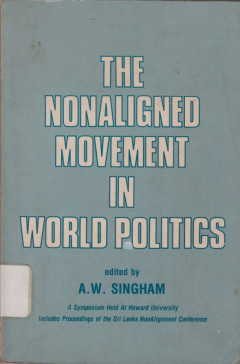
The Nonaligned movement in world politics
This volume examines the emergence, evolution, and political significance of the Non-Aligned Movement within the context of global politics during the Cold War. It analyzes the movement’s ideological foundations, its responses to major world conflicts, and its role in representing the interests of developing nations. Through contributions from various scholars, the book explores how nonalignm…
- Edisi
- -
- ISBN/ISSN
- 0-88208-069-9
- Deskripsi Fisik
- 273 pages ; 23 cm
- Judul Seri
- -
- No. Panggil
- 327.17 TIM n
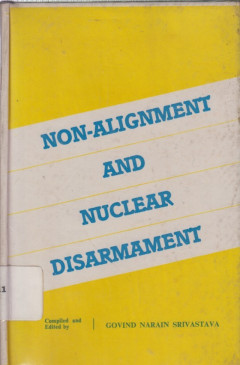
Non-alignment and nuclear disarmament
This volume examines the relationship between the Non-Aligned Movement (NAM) and global efforts toward nuclear disarmament. Compiled and edited by Govind Narain Srivastava, it analyzes NAM’s political stance on nuclear weapons, the advocacy for disarmament, and the movement’s influence on international peace negotiations. The book provides insights into the strategic, moral, and diplomatic …
- Edisi
- -
- ISBN/ISSN
- -
- Deskripsi Fisik
- 97 pages ; 22 cm
- Judul Seri
- -
- No. Panggil
- 327.174 SRI n

Pernik KAA 2015: Serba-serbi Peringatan 60 tahun Konferensi Asia–Afrika
Buku Pernik KAA 2015 merupakan dokumentasi komprehensif mengenai serangkaian kegiatan Peringatan 60 Tahun Konferensi Asia–Afrika (KAA) yang berlangsung di Bandung pada tahun 2015. Disusun dan disunting oleh Ridwan Hutagalung, buku ini menampilkan liputan foto, catatan kegiatan, refleksi sejarah, serta berbagai momen penting yang menggambarkan semangat solidaritas Asia–Afrika dalam era moder…
- Edisi
- -
- ISBN/ISSN
- 978-602-8331-73-9
- Deskripsi Fisik
- 183 halaman : ilustrasi ; 21 cm
- Judul Seri
- -
- No. Panggil
- 327.17 HUT p

Twenty Years of Bandung and Problems of Peace and Security in Asia: A Collect…
This volume presents a collection of scholarly articles reflecting on the twenty years following the historic 1955 Bandung Conference. Edited by Shashi Bhushan, the book discusses the challenges of peace and security in Asia, the evolution of Asian-African political solidarity, and the broader implications for international relations during the Cold War era. It examines regional conflicts, dipl…
- Edisi
- -
- ISBN/ISSN
- -
- Deskripsi Fisik
- xiv, 151 pages ; 22 cm
- Judul Seri
- -
- No. Panggil
- 327.095 BHU t
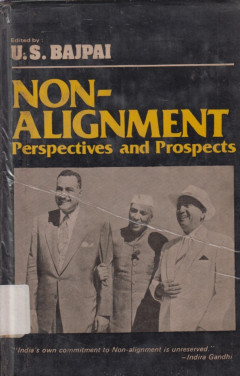
Non-alignment: perspectives and prospects
This volume presents a comprehensive collection of perspectives on the Non-Aligned Movement, examining its historical evolution, political foundations, and emerging challenges in the international system. Edited by U. S. Bajpai, the book gathers contributions from scholars and diplomats who analyze the principles, relevance, and strategic role of non-alignment in global affairs. It explores how…
- Edisi
- -
- ISBN/ISSN
- -
- Deskripsi Fisik
- xxii, 309 pages ; 25 cm
- Judul Seri
- -
- No. Panggil
- 327.17 BAJ n
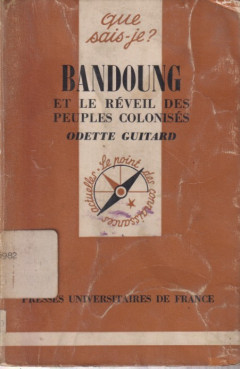
Bandoung et le réveil des peuples colonisés
This book analyzes the historical significance of the Bandung Conference and its role in awakening colonized peoples across Asia and Africa. Odette Guitard examines the political, cultural, and ideological processes that shaped the rise of Afro-Asian solidarity during the mid-twentieth century. The work highlights the emergence of anti-colonial movements, the development of Third World consciou…
- Edisi
- -
- ISBN/ISSN
- -
- Deskripsi Fisik
- 126 pages ; 18 cm
- Judul Seri
- -
- No. Panggil
- 325.309 GUI b
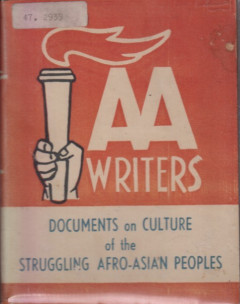
Documents on Culture of the Struggling Afro-Asian Peoples
This volume was published on the occasion of the Afro-Asian Writers’ Executive Committee Meeting held in Denpasar, Bali, Indonesia, from July 16–21, 1963. It presents a collection of documents highlighting the cultural struggles, aspirations, and intellectual contributions of Afro-Asian peoples during the post-colonial era. The publication reflects efforts to strengthen solidarity, cultural…
- Edisi
- -
- ISBN/ISSN
- -
- Deskripsi Fisik
- 118 pages ; 15,5 cm
- Judul Seri
- -
- No. Panggil
- 808.8 COM d
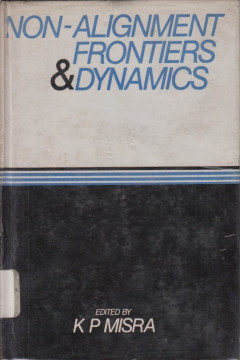
Non-alignment: Frontiers & dynamics
This book provides a comprehensive examination of the frontiers and evolving dynamics of the Non-Aligned Movement (NAM). Edited by K. P. Misra, it explores the historical background, ideological foundations, political strategies, and global roles of non-aligned countries during the Cold War era. The volume analyzes the shifting international environment and the challenges faced by NAM in mainta…
- Edisi
- -
- ISBN/ISSN
- -
- Deskripsi Fisik
- xi, 512 pages ; 24,5 cm
- Judul Seri
- -
- No. Panggil
- 327.17 MIS n
 Karya Umum
  Filsafat
  Agama
Agama  Ilmu-ilmu Sosial
  Bahasa
  Ilmu-ilmu Murni
  Ilmu-ilmu Terapan
  Kesenian, Hiburan, dan Olahraga
  Kesusastraan
  Geografi dan Sejarah