Ditapis dengan

The Pathans: 550 B.C.–A.D. 1957
This historical study by Olaf Caroe provides a comprehensive account of the Pathans (Pashtuns) from their earliest recorded origins in 550 B.C. to the mid-twentieth century. The book traces the political, cultural, and social development of the Pathan people, examining their tribal structure, migrations, and interactions with major empires, including the Persians, Mughals, and British. Caroe hi…
- Edisi
- -
- ISBN/ISSN
- 0-19-577221-0
- Deskripsi Fisik
- xxiv, 533 pages : illustrations ; 22,5 cm
- Judul Seri
- -
- No. Panggil
- 954.912 CAR p
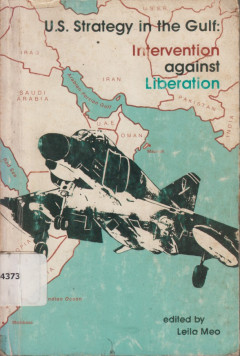
U.S. Strategy in the gulf: Intervention against liberation
bstract: This monograph analyzes United States strategic policies and military involvement in the Persian Gulf region during the period of regional upheaval. Edited by Leila Meo, the book examines the political motivations, geopolitical interests, and interventionist actions taken by the United States, particularly in relation to liberation movements and regional conflicts. It provides critic…
- Edisi
- -
- ISBN/ISSN
- 0-937694-50-9
- Deskripsi Fisik
- ii, 130 pages : illustrations ; 22,5 cm
- Judul Seri
- -
- No. Panggil
- 355.0335 MEO u

The Control of monopoly in the United Kingdom
This book comprehensively discusses the British government's policies in regulating and controlling monopolistic practices in the industrial sector. Paul H. Guénault and J. M. Jackson outline the legal framework, economic policies, and institutions involved in overseeing business competition in Britain in the mid-20th century. The analysis covers the background to the formation of anti-monopol…
- Edisi
- -
- ISBN/ISSN
- -
- Deskripsi Fisik
- ix, 197 pages ; 22 cm
- Judul Seri
- -
- No. Panggil
- 338.88 GUE c

The USSR in 1989: A Record of events
This volume provides a detailed chronological record of political, social, and economic developments in the Soviet Union during the pivotal year of 1989. Compiled from a wide range of official documents, news reports, and archival materials, the book traces major reforms, internal conflicts, institutional changes, and public movements that accelerated the disintegration of the Soviet system. It…
- Edisi
- -
- ISBN/ISSN
- 0-8133-8016-2
- Deskripsi Fisik
- x, 740 pages ; 23,5 cm
- Judul Seri
- -
- No. Panggil
- 947.085 TOL u
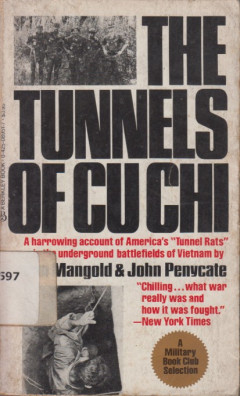
The Tunnels of Cu Chi
“The Tunnels of Cu Chi” provides a compelling and detailed account of the underground tunnel networks used by the Viet Cong during the Vietnam War. Through interviews, historical research, and firsthand exploration, Tom Mangold and John Penycate reveal how the tunnels served as a strategic defense system, living quarters, communication routes, and battle positions. The book illustrates the …
- Edisi
- -
- ISBN/ISSN
- 0-425-08951-7
- Deskripsi Fisik
- xvi, 301 pages : illustrations ; 17,5 cm
- Judul Seri
- -
- No. Panggil
- 959.7043 MAN t
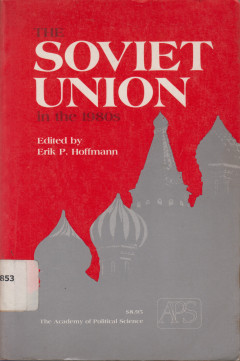
The Soviet Union in the 1980s
The Soviet Union in the 1980s is a scholarly volume featuring articles presented in the Proceedings of the Academy of Political Science. This issue analyzes the political, economic, and social dynamics of the USSR during a transformative decade marked by stagnation, leadership transitions, and the early stages of reform. Contributors examine Soviet domestic and foreign policy, ideological devel…
- Edisi
- -
- ISBN/ISSN
- 0065-0684
- Deskripsi Fisik
- xii, 244 pages ; 23 cm
- Judul Seri
- -
- No. Panggil
- 947.085 HOF s
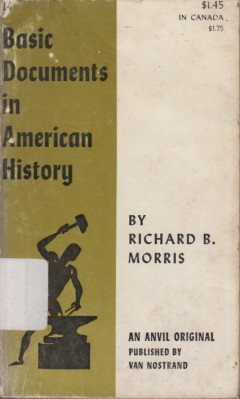
Basic documents in American history
“Basic Documents in American History” is a curated collection of foundational texts that shaped the political, social, and legal development of the United States. Compiled by historian Richard B. Morris, the book presents key documents—from colonial charters and revolutionary writings to early national policies—that illustrate the evolution of American governance and democratic ideals. …
- Edisi
- -
- ISBN/ISSN
- -
- Deskripsi Fisik
- 190 pages ; 18 cm
- Judul Seri
- -
- No. Panggil
- 973 MOR b

Great Britain: Foreign policy and the Span of Empire, 1689–1971
Volume III of Great Britain: Foreign Policy and the Span of Empire, 1689–1971 is a documentary series that presents primary sources on British foreign policy and the development of the British Empire over nearly three centuries. Compiled by Joel H. Wiener, this book brings together official documents, speeches, government reports, and contemporary writings that reflect the dynamics of interna…
- Edisi
- Volume 3
- ISBN/ISSN
- 0-07-079730-7
- Deskripsi Fisik
- 2727 pages ; 24 cm
- Judul Seri
- -
- No. Panggil
- 327.42 WIE g
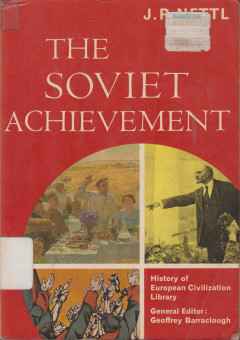
The Soviet achievement
The Soviet Achievement by J. P. Nettl is an illustrated historical and analytical survey of the development of the Soviet Union, highlighting its political, social, economic, and cultural evolution. Through 144 illustrations, including 19 in color, the book presents an accessible yet scholarly exploration of the USSR's rise, ideological foundations, institutional structures, and international i…
- Edisi
- -
- ISBN/ISSN
- -
- Deskripsi Fisik
- 288 pages : illustrations ; 21 cm
- Judul Seri
- -
- No. Panggil
- 947 NET s
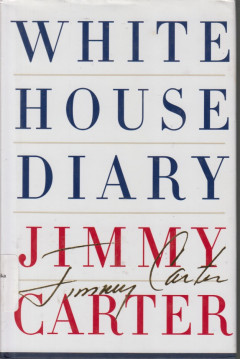
White house diary
White House Diary presents President Jimmy Carter’s detailed, day-to-day reflections during his years in the White House from 1977 to 1981. Drawn from his personal diary entries, the book provides an intimate look at major political decisions, diplomatic challenges, and domestic issues faced during his presidency. Carter offers insights into global events, key policy debates, and his interact…
- Edisi
- -
- ISBN/ISSN
- 978-0-374-28099-4
- Deskripsi Fisik
- xv, 370 pages : illustrations ; 23,5 cm
- Judul Seri
- -
- No. Panggil
- 973.926092 CAR w
 Karya Umum
  Filsafat
  Agama
Agama  Ilmu-ilmu Sosial
  Bahasa
  Ilmu-ilmu Murni
  Ilmu-ilmu Terapan
  Kesenian, Hiburan, dan Olahraga
  Kesusastraan
  Geografi dan Sejarah