Ditapis dengan
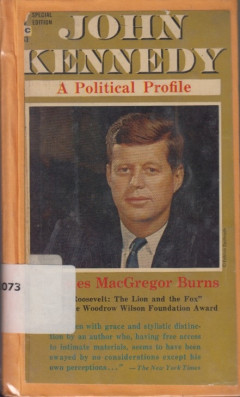
John Kennedy: A Political profile
“John Kennedy: A Political Profile” presents an insightful early biography of John F. Kennedy written by historian James MacGregor Burns. The book explores Kennedy’s upbringing, education, military service, and early political career, tracing his rise from congressman to national prominence before becoming President of the United States. Burns examines Kennedy’s character, leadership st…
- Edisi
- -
- ISBN/ISSN
- -
- Deskripsi Fisik
- xxi, 288 pages : illustrations ; 18,5 cm
- Judul Seri
- -
- No. Panggil
- 973.922 BUR j
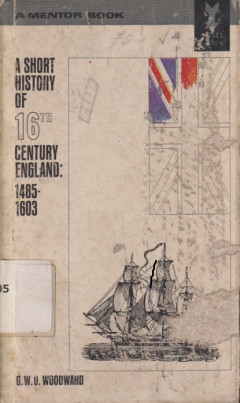
A Short history of sixteenth-century England
This book provides a concise overview of English history in the 16th century, an important period marked by the English Reformation, the reign of the Tudor dynasty, political turmoil, and major social changes. G. W. O. Woodward presents descriptions of key figures such as Henry VIII, Mary I, and Elizabeth I, as well as the socio-economic dynamics that shaped English society at that time. This b…
- Edisi
- -
- ISBN/ISSN
- -
- Deskripsi Fisik
- 256 pages : illustration ; 18 cm
- Judul Seri
- -
- No. Panggil
- 942.05 WOO s
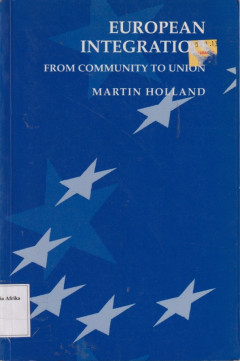
European integration: From community to union
European Integration: From Community to Union by Martin Holland provides a comprehensive analysis of the evolution of European integration from the early European Community toward the formation of the European Union. The book examines institutional development, policy-making processes, major treaties, and political dynamics that shaped modern Europe. Holland discusses the shifting roles of memb…
- Edisi
- -
- ISBN/ISSN
- 1-85567-241-3
- Deskripsi Fisik
- 258 pages ; 23 cm
- Judul Seri
- -
- No. Panggil
- 341.2422 HOL e

Modern European governments: Cases in comparative policy making
Modern European Governments: Cases in Comparative Policy Making, edited by Roy C. Macridis, presents a series of analytical case studies examining the structures, processes, and outcomes of public policy across selected European countries. The book highlights the diversity of governmental systems and illustrates how political institutions, social forces, and historical contexts influence policy…
- Edisi
- -
- ISBN/ISSN
- -
- Deskripsi Fisik
- 244 pages ; 23 cm
- Judul Seri
- -
- No. Panggil
- 320.94 MAC m

A Short history of nineteenth-century England
This book provides a concise yet comprehensive overview of British history in the 19th century. John W. Derry discusses political, economic, and social developments from the post-Napoleonic era to the end of the Victorian era. Important themes such as the Reform Act, the development of industrialization, changes in social structure, and British foreign policy are presented clearly and systemati…
- Edisi
- -
- ISBN/ISSN
- -
- Deskripsi Fisik
- 239 pages : illustration ; 18 cm
- Judul Seri
- -
- No. Panggil
- 941.081 DER s
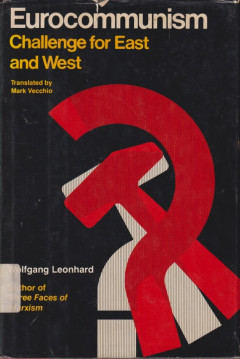
Eurocommunism: Challenge for east and west
Eurocommunism: Challenge for East and West by Wolfgang Leonhard offers an in-depth analysis of the Eurocommunist movement as it developed in Western Europe during the 1970s. Leonhard examines the ideological foundations, political strategies, and organizational changes within major Communist parties in Italy, France, and Spain, and contrasts them with Soviet-style Communism in Eastern Europe. T…
- Edisi
- -
- ISBN/ISSN
- 0-03-044951-0
- Deskripsi Fisik
- x, 398 pages ; 23,5 cm
- Judul Seri
- -
- No. Panggil
- 320.51 LEO e

The Memoirs of field-marshal the viscount montgomery of Alamein, K.G.
This book contains the official memoirs of Field Marshal Bernard Law Montgomery, one of the most influential commanders of World War II and a key figure in the Allied victory in North Africa, particularly in the Battle of El Alamein. Montgomery describes his military career, the strategies he employed, his relationships with Allied leaders such as Eisenhower and Churchill, and various important…
- Edisi
- -
- ISBN/ISSN
- -
- Deskripsi Fisik
- 574 pages : illustration ; 23,5 cm
- Judul Seri
- -
- No. Panggil
- 355.0092 MON m
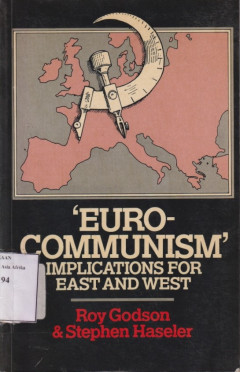
‘Eurocommunism’: Implications for east and west
Eurocommunism’: Implications for East and West examines the rise of Eurocommunist movements across Western Europe and their political significance during the late 20th century. Written by Roy Godson and Stephen Haseler, the book analyzes the ideological evolution of Eurocommunist parties, their relations with the Soviet Union, their influence on domestic politics, and the implications for Eas…
- Edisi
- -
- ISBN/ISSN
- 0-333-25677-8
- Deskripsi Fisik
- ix, 144 pages ; 21,5 cm
- Judul Seri
- -
- No. Panggil
- 329.02094 GOD e
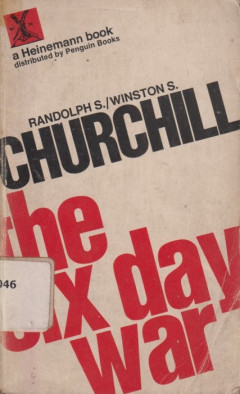
The Six day war
This book is a narrative and analytical reconstruction of the Six-Day War of 1967, written by Randolph S. Churchill and his grandson Winston S. Churchill. The authors trace the series of diplomatic, political, and military events that triggered the conflict between Israel and the Arab states, and describe the course of a war that was short but had a major impact on the geopolitics of the Middle…
- Edisi
- -
- ISBN/ISSN
- -
- Deskripsi Fisik
- 261 pages : illustration ; 18 cm
- Judul Seri
- -
- No. Panggil
- 956.04 CHU s
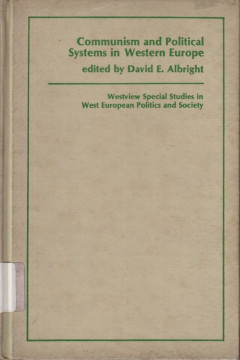
Communism and political systems in Western Europe
Communism and Political Systems in Western Europe is a scholarly collection of essays examining the development, strategies, and influence of communist movements and parties in Western Europe after 1945. Edited by David E. Albright, the volume analyzes the ideological evolution of European communism, its relationship with state institutions, and its impact on democratic systems. Through compara…
- Edisi
- -
- ISBN/ISSN
- 0-89158-308-4
- Deskripsi Fisik
- xx, 379 pages : illustration ; 23,5 cm
- Judul Seri
- -
- No. Panggil
- 335.43094 ALB c
 Karya Umum
  Filsafat
  Agama
Agama  Ilmu-ilmu Sosial
  Bahasa
  Ilmu-ilmu Murni
  Ilmu-ilmu Terapan
  Kesenian, Hiburan, dan Olahraga
  Kesusastraan
  Geografi dan Sejarah