Ditapis dengan
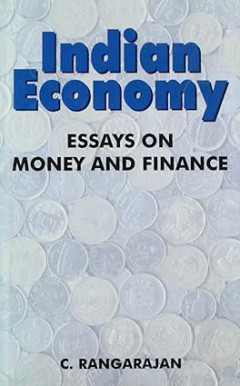
Indian economy: Essays on money and finance
This volume, which essentially focuses on select policy issues with regard to the Indian economy, comprises a collection of lectures delivered by the author at various national and international for a during 1992-97. The thematic grouping of the lectures (in four parts) and their sequential presentation help in tracing the route travelled by India with respect to economic reforms. The first par…
- Edisi
- -
- ISBN/ISSN
- 81-7476-211-6
- Deskripsi Fisik
- xix, 330 pages : index ; 22 cm
- Judul Seri
- -
- No. Panggil
- 330.954 Ran i

The rise of India: Its transformation from poverty to prosperity
he book speaks not only to the mind and intellect but also to the heart as it clearly demonstrates that economic development is above all a question of people. It also shows that the Indian society, and particularly its youth, is much more open to changes than its political and bureaucratic class, and would welcome a third wave of reforms that would help the poor to benefit from economic progress.
- Edisi
- -
- ISBN/ISSN
- 978-0-470-82201-2
- Deskripsi Fisik
- ix, 176 pages : index ; 24 cm
- Judul Seri
- -
- No. Panggil
- 330.954 Raj r

Understanding India's economic reforms: The past, the present and the future …
This book contains: 1. Productivity and growth in Indian manufacturing 2. New industrial policy 3. New small enterprise policy 4. Maximizing foreign investment 5. Public versus private sector 6. Trade policy & industrialization in India
- Edisi
- -
- ISBN/ISSN
- 81-7188-105-X
- Deskripsi Fisik
- 248 pages ; 23 cm
- Judul Seri
- -
- No. Panggil
- 330.954 Kap u

India unbound
India Unbound is the riveting story of a nation’s rise from poverty to prosperity and the clash of ideas that occurred along the way. Gurcharan Das examines the highs and lows of independent India through the prism of history, his own experiences and those of numerous others he has met-from young people in sleepy UP villages to chiefs of software companies in Bangalore. Defining and exploring…
- Edisi
- -
- ISBN/ISSN
- 978-0-143-06301-8
- Deskripsi Fisik
- xix, 419 pages : index ; 22 cm
- Judul Seri
- -
- No. Panggil
- 330.954 Das i
The Indian economy: Major debates since independence
These papers analyze all of the major debates on India's economy that have been voiced since the country achieved independence fifty years ago. Such controversies, as detailed in this important collection, fully represent the various phases of India's financial development--including those economic reforms still taking place today.
- Edisi
- ed. 2
- ISBN/ISSN
- 0-19-564460-3
- Deskripsi Fisik
- 424 pages : index ; 23 cm
- Judul Seri
- -
- No. Panggil
- 330.954 Byr i
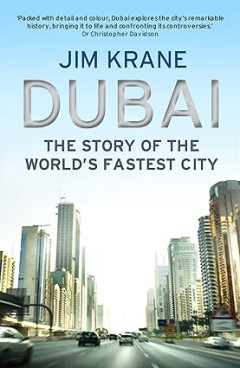
Dubai: The story of the world's fastest city
In the 1950s, Dubai's population of a few thousand scraped a living in a near waterless desert by picking dates, diving for pearls, or sailing in wooden dhows to trade with Iran and India. The town was as poor as any village in Somalia or the Sudan. Today freewheeling Dubai is everything the rest of the Arab world is not: capitalism on cocaine, Las Vegas without the gambling. Until last year, i…
- Edisi
- -
- ISBN/ISSN
- 978-1-84887-009-3
- Deskripsi Fisik
- viii, 356 pages : illustrations (black and white) : index ; 20 cm
- Judul Seri
- -
- No. Panggil
- 330.9538 Kra d
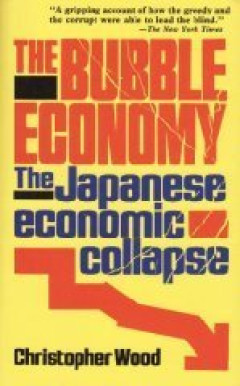
The bubble economy : The Japanese economic collapse
Christopher Wood analyses the Japanese financial system and shows how it could be the Achilles heel of the country's economy. Contents: 1. Bubble do matter 2. Banks 3. Land 4. Life insurance companies 5. Securities companies, etc.
- Edisi
- Ed.1 ; Cet.2
- ISBN/ISSN
- 0-8048-1906-8
- Deskripsi Fisik
- 210 pages ; 18 cm
- Judul Seri
- -
- No. Panggil
- 330.952 Woo b

Asia hemisfer baru dunia : Pergeseran kekuatan global ke timur yang tak terlu…
Dalam buku Asia Hemisfer Baru Dunia: Pergeseran Kekuatan Global ke Timur yang Tak Terelakkan, Kishore Mahbubani mengulas dengan bukti-bukti keberhasilan negara di Asia yang berkembang menjadi kekuatan utama dunia, terutama China dan India. Namun, yang menjadi ironi adalah ketika kekuatan-kekuatan baru dari Asia itu tumbuh dengan mengadopsi nilai-nilai Barat, kini justru Barat mulai merasa teran…
- Edisi
- -
- ISBN/ISSN
- 978-979-709-608-3
- Deskripsi Fisik
- xx, 362 halaman : illustrations (black and white) : index ; 23 cm
- Judul Seri
- -
- No. Panggil
- 330.95 Mah a
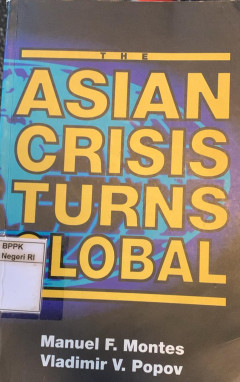
The Asian crisis turns global
In August 1998, the Asian currency crisis that had started in mid-1997 metastasized into a global financial crisis with the devaluation of the rouble and a declaration of a Russian Government default on its internal debt. Is this the first wave of such crises the world will see in the future? One common feature among the countries that have fallen victim to the crisis is that they were all…
- Edisi
- -
- ISBN/ISSN
- 981-230-050-3
- Deskripsi Fisik
- vi, 123 pages : illustrations (black and white) : index ; 22 cm.
- Judul Seri
- -
- No. Panggil
- 330.95 Mon a

Japan's failed revolution: Koizumi and the politics of economic reform
Japan's failed revolution: Koizumi and the politics of economic reform asks why, despite all the high expectation's, the Japanese public's desire for economic reform, and leadership of a majority coalition in a parliamentary democracy, the reformer prime minister Koizumi has not achieved the economic reforms expected of him since he surprisingly attained power over a year ago. this book expl…
- Edisi
- -
- ISBN/ISSN
- 0-7315-3693-2
- Deskripsi Fisik
- ix, 260 pages : index ; 23 cm
- Judul Seri
- -
- No. Panggil
- 330.95 Mul j
 Karya Umum
  Filsafat
  Agama
Agama  Ilmu-ilmu Sosial
  Bahasa
  Ilmu-ilmu Murni
  Ilmu-ilmu Terapan
  Kesenian, Hiburan, dan Olahraga
  Kesusastraan
  Geografi dan Sejarah